Digital Accessibility Updates 2026: Inclusive Online Experience

In an increasingly interconnected world, digital presence is no longer a luxury but a fundamental necessity. From accessing essential services to engaging in social interactions, the online realm shapes our daily lives. However, for a significant portion of the global population, navigating this digital landscape can be fraught with barriers. This is where the critical importance of digital accessibility updates comes into play. As we look towards 2026 and beyond, the commitment to creating an inclusive online experience is not just an ethical imperative but a legal and business necessity.
The concept of digital accessibility ensures that websites, applications, and other digital tools are usable by everyone, regardless of their abilities or disabilities. This includes individuals with visual, auditory, motor, speech, and cognitive impairments. Failing to prioritize accessibility can lead to exclusion, missed opportunities, and potential legal repercussions. The landscape of digital accessibility is constantly evolving, with new technologies, standards, and legal frameworks emerging regularly. Therefore, staying informed about the latest digital accessibility updates is paramount for any organization or individual aiming to foster a truly inclusive digital environment.
This comprehensive guide will delve into the anticipated digital accessibility updates for 2026, offering practical solutions and strategies to enhance your online presence. We will explore the latest regulatory changes, technological advancements, and best practices that will shape the future of inclusive digital design. Our goal is to equip you with the knowledge and tools needed to not only comply with evolving standards but to genuinely embrace accessibility as a core principle of your digital strategy.
Understanding the Evolving Landscape of Digital Accessibility
The journey towards a fully accessible digital world is ongoing. Over the past few decades, significant strides have been made, driven by advocacy, technological innovation, and legislative action. The Web Content Accessibility Guidelines (WCAG), developed by the World Wide Web Consortium (W3C), have served as the cornerstone of web accessibility standards globally. However, as digital technologies advance, so too must the guidelines that govern their accessibility.
WCAG 2.2 and Beyond: What to Expect in 2026
WCAG 2.2, published in October 2023, introduced several new success criteria aimed at addressing more modern web usage patterns and improving accessibility for users with cognitive and learning disabilities, and those with low vision or motor disabilities. These updates include criteria related to accessible authentication, consistent help, and drag-and-drop interactions. As we move towards 2026, it’s crucial to understand that adherence to WCAG 2.2 will become the baseline expectation, with further iterations and supplementary guidance likely to emerge.
Anticipate discussions and potential advancements towards WCAG 3.0, also known as ‘Project Silver.’ While WCAG 2.x focuses on specific success criteria, WCAG 3.0 aims for a more flexible and holistic approach, encompassing a wider range of digital experiences beyond just the web, such as virtual reality (VR) and augmented reality (AR). It will likely introduce a scoring system for accessibility, moving beyond a simple pass/fail, and will emphasize user outcomes rather than just technical compliance. While a full release of WCAG 3.0 might not be universally adopted by 2026, its principles and pilot programs will undoubtedly influence the direction of digital accessibility updates and best practices.
Key Regulatory Shifts and Legal Implications
Beyond WCAG, various international and national laws mandate digital accessibility. In the United States, the Americans with Disabilities Act (ADA) has been interpreted by courts to apply to websites and mobile applications. In Europe, the European Accessibility Act (EAA) sets a wide range of accessibility requirements for products and services, with a compliance deadline of June 2025. This means that by 2026, many businesses operating within the EU will be expected to be fully compliant, significantly impacting global digital services.
Other regions are also strengthening their accessibility legislation. Canada’s Accessible Canada Act, Australia’s Disability Discrimination Act, and similar laws in Asia and Latin America are pushing organizations worldwide to prioritize accessibility. The trend is clear: legal frameworks are catching up with digital realities, and non-compliance carries significant risks, including lawsuits, hefty fines, and reputational damage. Therefore, staying informed about these digital accessibility updates is not just about good practice, but about legal risk mitigation.
Practical Solutions for Enhancing Digital Accessibility in 2026
Implementing effective digital accessibility requires a multi-faceted approach, integrating design, development, and content creation. It’s not a one-time fix but an ongoing commitment. Here are some practical solutions and strategies to prepare for and implement the latest digital accessibility updates.
1. Prioritizing Accessible Design from the Outset
The most effective way to achieve digital accessibility is to integrate it into the initial design phase, rather than treating it as an afterthought. This concept, known as ‘inclusive design’ or ‘design for all,’ ensures that accessibility considerations are baked into the core of your digital products and services. By doing so, you can avoid costly retrofits and ensure a seamless experience for all users.
- User Research with Diverse Audiences: Involve individuals with disabilities in your user research and testing processes. Their insights are invaluable for identifying potential barriers and developing truly inclusive solutions.
- Color Contrast and Readability: Ensure sufficient color contrast between text and background to aid users with low vision or color blindness. Utilize tools to check contrast ratios against WCAG standards.
- Clear and Consistent Layouts: Design intuitive navigation and consistent layouts that reduce cognitive load. Users with cognitive disabilities, for example, benefit greatly from predictable interfaces.
- Focus Management: Ensure that interactive elements receive a clear visual focus indicator when navigated by keyboard. This is crucial for users who cannot use a mouse.
2. Robust Development Practices for Accessibility
Developers play a crucial role in translating accessible designs into functional digital experiences. Adhering to best practices in coding and utilizing accessibility features within various frameworks are essential for meeting digital accessibility updates.
- Semantic HTML: Use semantic HTML elements (e.g.,
<header>,<nav>,<main>,<footer>,<button>) to convey meaning and structure to assistive technologies like screen readers. Avoid using generic<div>elements for everything. - ARIA Attributes: Implement Accessible Rich Internet Applications (ARIA) attributes when native HTML elements don’t provide the necessary semantic information or interactivity. ARIA roles, states, and properties enhance the accessibility of dynamic content and complex user interface components.
- Keyboard Navigation: Ensure all interactive elements are operable via keyboard alone, in a logical and predictable order. Test thoroughly to confirm that users can navigate, activate, and interact with all content without a mouse.
- Responsive Design and Zoom Functionality: Websites and applications must be fully responsive, adapting to various screen sizes and orientations. Users should also be able to zoom in on content without losing functionality or readability.
- Forms Accessibility: Design forms with clear labels, instructions, and error messages that are programmatically associated with their respective input fields. Provide appropriate input types for better auto-completion and validation.

3. Content is King: Accessible Content Creation
Even the most technically accessible platform can be rendered inaccessible by poorly crafted content. Content creators, marketers, and editors must be trained in accessibility best practices to ensure all information is consumable by a diverse audience. This is a critical aspect of addressing digital accessibility updates.
- Alternative Text for Images: Provide descriptive alternative text (alt text) for all meaningful images. This allows screen readers to convey the visual information to users who cannot see the images. For decorative images, use empty alt text (
alt=""). - Video and Audio Accessibility: Offer captions for all video content to assist users with hearing impairments. Transcripts should be available for both video and audio content, and audio descriptions should be provided for videos that convey important visual information not present in the audio track.
- Clear and Concise Language: Use plain language and avoid jargon where possible. Break down complex information into smaller, digestible chunks. This benefits users with cognitive disabilities, learning disabilities, and those for whom the content’s language is not their native tongue.
- Accessible Document Formats: Ensure that downloadable documents (PDFs, Word documents, presentations) are also accessible. This includes proper heading structures, tagged content, and alt text for images within these documents.
- Meaningful Link Text: Use descriptive link text that clearly indicates the destination or purpose of the link, rather than generic phrases like ‘click here’ or ‘read more.’
The Role of AI and Emerging Technologies in Digital Accessibility
Artificial intelligence (AI) and other emerging technologies are poised to revolutionize digital accessibility, offering innovative solutions to long-standing challenges. As we approach 2026, expect to see significant advancements in this area, further shaping digital accessibility updates.
AI-Powered Accessibility Tools
AI is already being used to automate aspects of accessibility testing, identify potential issues, and even generate alt text or captions. While AI tools are powerful, they should be used as aids, not replacements for human oversight and testing. Human expertise remains crucial for nuanced interpretation and ensuring true inclusivity.
- Automated Accessibility Checkers: AI-driven tools can quickly scan websites for common accessibility violations, such as missing alt text, insufficient color contrast, or improper heading structures.
- Speech-to-Text and Text-to-Speech Enhancements: AI is continually improving the accuracy and naturalness of speech-to-text for captioning and text-to-speech for screen readers, making digital content more accessible for users with hearing or visual impairments.
- Personalized Accessibility Experiences: Future AI applications may offer highly personalized accessibility settings, adapting interfaces and content delivery based on individual user needs and preferences, creating a truly adaptive online experience.
Virtual Reality (VR) and Augmented Reality (AR) Accessibility
As VR and AR technologies become more mainstream, ensuring their accessibility is a growing concern. WCAG 3.0 is expected to provide guidance in this area. Designing immersive experiences that are accessible to users with sensory or motor impairments presents unique challenges, but also opportunities for innovative solutions.
- Alternative Input Methods: Developing diverse input methods beyond traditional controllers, such as gaze tracking, voice commands, or brain-computer interfaces, can make VR/AR more accessible.
- Customizable Visual and Auditory Settings: Allowing users to adjust visual elements (e.g., contrast, field of view) and auditory cues (e.g., spatial audio, volume) can cater to different sensory needs.
- Haptic Feedback: Utilizing haptic feedback to convey information can be particularly beneficial for users with visual or auditory impairments in immersive environments.
Measuring and Maintaining Accessibility: An Ongoing Commitment
Achieving accessibility is not a one-time project; it’s an ongoing process that requires continuous monitoring, testing, and improvement. To keep pace with digital accessibility updates and ensure sustained compliance, organizations must establish robust measurement and maintenance strategies.
Regular Accessibility Audits and Testing
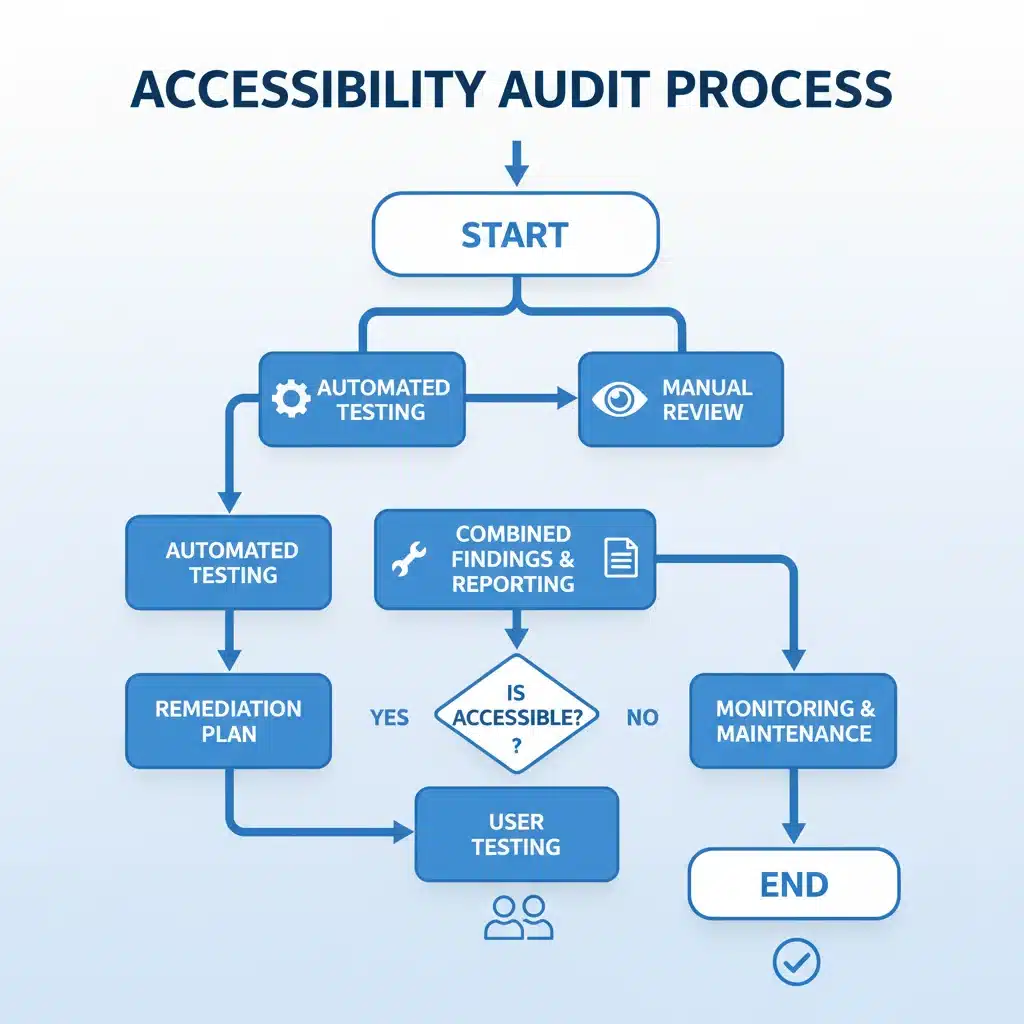
Conducting regular accessibility audits is crucial for identifying new barriers that may arise from content updates, feature additions, or platform changes. A comprehensive audit typically involves a combination of automated and manual testing.
- Automated Testing: Tools like Axe, Lighthouse, and WAVE can quickly identify a significant portion of accessibility issues. Integrate these into your continuous integration/continuous deployment (CI/CD) pipelines for early detection.
- Manual Testing: Automated tools cannot catch all accessibility issues. Manual testing by experienced accessibility professionals, including keyboard-only navigation, screen reader testing, and zoom testing, is essential for a thorough evaluation.
- User Testing with People with Disabilities: The most valuable feedback comes from actual users with disabilities. Involve them in usability testing sessions to gain firsthand insights into their experiences and challenges.
Accessibility Statements and Feedback Mechanisms
A transparent accessibility statement on your website or application demonstrates your commitment to inclusivity. This statement should detail your accessibility efforts, the standards you adhere to, and any known limitations. Crucially, it should also provide a clear and easily accessible feedback mechanism.
- Dedicated Contact Information: Offer an email address or phone number for users to report accessibility issues or provide feedback.
- Prompt Response and Remediation: Establish a process for promptly addressing reported issues and communicating remediation efforts to users.
- Public Roadmap: Consider publishing an accessibility roadmap that outlines your ongoing efforts and planned improvements, fostering trust and transparency with your user base.
The Business Case for Digital Accessibility in 2026
While the ethical and legal imperatives for digital accessibility are compelling, there’s also a strong business case for embracing it. In 2026, organizations that prioritize accessibility will gain a significant competitive advantage.
Expanding Your Market Reach
People with disabilities represent a substantial and often underserved market segment. By making your digital products and services accessible, you open your business to millions of potential customers, clients, and employees. This expanded market reach can lead to increased revenue and brand loyalty.
Enhanced SEO and User Experience
Many accessibility best practices align directly with good SEO principles. For example, well-structured HTML, descriptive alt text, and clear content all contribute to better search engine rankings. Furthermore, an accessible website generally offers a superior user experience for everyone, not just those with disabilities. Improved navigation, faster loading times, and intuitive interfaces benefit all users, leading to higher engagement and conversion rates.
Reduced Legal Risk and Improved Brand Reputation
Proactive adherence to accessibility standards significantly reduces the risk of costly lawsuits and legal penalties. Beyond legal compliance, a commitment to accessibility enhances your brand’s reputation as a socially responsible and inclusive organization. This positive image can attract top talent, foster customer loyalty, and differentiate you from competitors.
Fostering Innovation and Creativity
Designing for accessibility often sparks innovation. When you consider the needs of diverse users, it can lead to creative solutions and features that benefit everyone. For example, voice control technology, initially developed for accessibility, is now widely used by the general population.
Conclusion: Embracing an Inclusive Digital Future
The journey towards a truly inclusive digital world is an ongoing one, marked by continuous learning, adaptation, and innovation. As we navigate the landscape of digital accessibility updates in 2026, it’s clear that accessibility is no longer an optional add-on but a foundational element of responsible digital design and development.
By understanding the evolving WCAG standards, staying abreast of regulatory changes, implementing robust design and development practices, and prioritizing accessible content, organizations can not only avoid legal pitfalls but unlock significant business advantages. The integration of AI and other emerging technologies promises to further enhance accessibility, creating more personalized and adaptive digital experiences for all.
Ultimately, a commitment to digital accessibility is a commitment to human dignity and equal opportunity. It’s about ensuring that everyone, regardless of their abilities, has the means to participate fully in the digital age. By embracing these updates and making accessibility a core value, we can collectively build a more equitable, inclusive, and accessible online experience for everyone, now and in the years to come.