Unpacking the New Normal: Navigating Evolving Social Dynamics
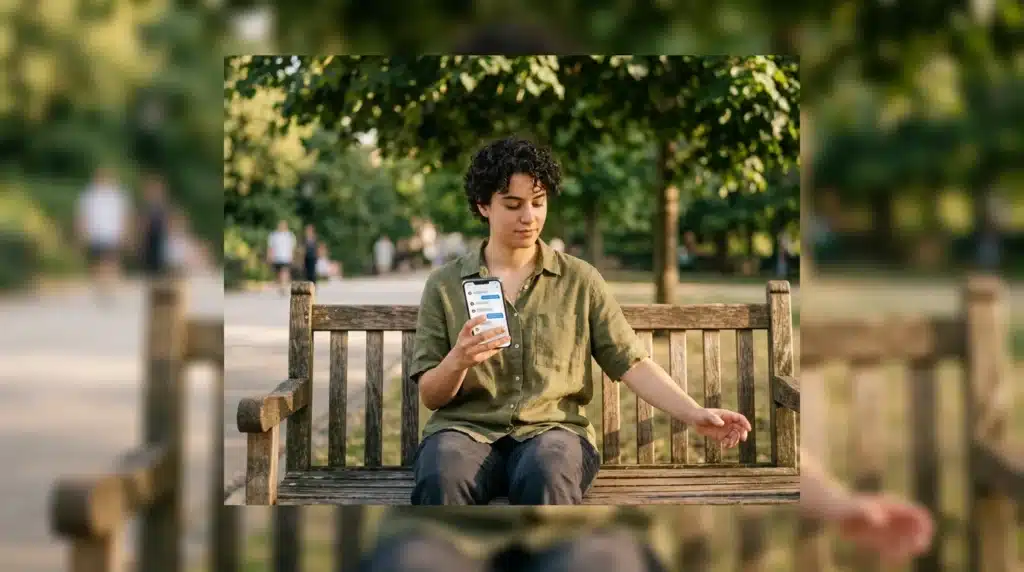
Does it feel like the unwritten rules of social interaction are being rewritten every single day? One moment, a phone call is normal; the next, it’s an unforgivable intrusion. This sense of constant flux isn’t just in your head. We are living through one of the most profound and rapid shifts in social dynamics in human history, where the familiar landscapes of community, friendship, and even personal identity are being reshaped by forces that are both invisible and omnipresent.
This transformation is driven by the deep fusion of our digital and physical worlds. It’s no longer a matter of ‘going online’—we now exist in a blended reality where our digital habits directly inform our real-world behaviors, and vice-versa. This integration has altered the very currency of connection, trading shared physical experiences for shared digital content and creating an ‘always on’ culture that challenges our ability to be present. The result is a new social fabric, woven from algorithms, notifications, and curated personas.
Navigating this new normal requires more than just keeping up with the latest apps; it demands a deeper understanding of the underlying currents. This article unpacks the key social dynamics at play, from the evolution of digital relationships and the rise of ‘identity flux’ to the economic echo these shifts create in consumer behavior. We will explore not only the challenges but also the strategies for building personal resilience in an era defined by perpetual change, offering a guide to understanding the world we now inhabit.
The Shifting Sands of Connection: Redefining Social Interaction
Our traditional blueprints for community are being aggressively redrawn. The very definition of social connection is up for debate, as digital spaces increasingly replace physical ones as the primary stage for human interaction. This isn’t just about convenience; it reflects a core change in what we value and how we form bonds. People are trading the unpredictable, often messy, reality of face-to-face contact for the curated and controlled environment of a screen. The question is, what is being lost in translation?
A recent Pew Research Center study highlights this starkly, revealing that 57% of teens have made a new friend online, while only 24% of those same teens regularly spend time with their local friends outside of school. This isn’t a simple swap of one venue for another. The dynamics are entirely different. Building a relationship online is like assembling furniture with an instruction manual — it’s structured, goal-oriented, and you can pause whenever you want. Real-world interaction is more like improvisational jazz; it’s spontaneous, requires deep listening, and thrives on unexpected moments.
From ‘Likes’ to ‘Links’: The Evolution of Digital Relationships
The currency of connection has changed. We’ve moved from shared experiences to shared content, where a ‘like’ or a comment serves as a low-cost, low-risk social signal. These micro-interactions provide a steady drip of validation, but do they build genuine rapport? What most people miss is that these platforms are engineered for engagement, not necessarily for deep connection. The algorithms prioritize content that elicits a quick reaction, which often has little to do with fostering long-term, supportive relationships.
This is not to say digital friendships are invalid. They can be intensely meaningful, especially for marginalized groups seeking a community they cannot find locally. The underrated factor here is how these digital habits reshape our social fabric in ways we are only beginning to comprehend. The challenge isn’t about choosing between online or offline; it’s about understanding the unique grammar of each. Many of these subtle shifts are redefining daily life by altering our expectations for friendship itself.
Ultimately, we are running a massive, uncontrolled social experiment. The long-term effects of a generation raised on algorithmically-mediated friendships remain unknown, forcing us to question whether our new digital social patterns can sustain the weight of true human community.
The Blended Reality: Where Digital and Daily Life Intersect
The social experiment has entered its most pervasive phase. We no longer “go online”; we simply exist in a state where the digital and physical worlds are inseparably fused. This blended reality isn’t a future concept—it is the very air we breathe, structuring our workdays, shaping our leisure, and even mediating our internal thoughts. Our phones are not just tools; they are extensions of our consciousness, portals through which a significant portion of our lives is lived.
This integration offers undeniable convenience. But what is the real price of this seamlessness? The promise was a life enhanced by technology, yet for many, the result is a life dictated by it. A recent Nielsen report suggests the average adult now spends an astonishing 11 hours and 27 minutes per day interacting with media. This constant stream of information and connection has fundamentally altered our social and cognitive patterns, a topic further explored in our guide to contemporary digital and social patterns. We’ve gained efficiency, but we may have lost something far more valuable in the exchange.
The ‘Always On’ Culture: Productivity vs. Presence
Perhaps the most significant consequence of this blended life is the rise of an ‘always on’ culture. The traditional boundaries separating work, home, and social life have dissolved into a single, continuous stream of notifications and demands. This is especially true for the remote workforce, where the home office often becomes an inescapable digital command center. The data suggests—though not conclusively—that this arrangement increases output at the expense of well-being. A study from the University of Chicago found that employees with high levels of digital connectivity outside of work hours reported a 38% increase in symptoms of psychological burnout.
The issue isn’t merely about working longer hours. It’s about the fragmentation of our attention. Trying to be present with family while simultaneously monitoring work emails is like attempting to have a deep conversation while a dozen different radios are playing in the background. Your brain is constantly switching contexts, a process that is both exhausting and inefficient. We are tricked into believing we are hyper-productive, when in reality we are just hyper-active. The underrated factor here is the slow erosion of deep focus, the very state required for meaningful work and genuine human connection. These are the unseen currents redefining daily life that many people miss.
Navigating Digital Well-being: Strategies for Balance
Reclaiming our focus and presence from the digital deluge is not about rejecting technology. That ship has sailed. Instead, it requires a conscious and often rebellious act of setting personal policies for engagement. This isn’t about a “digital detox” vacation; it’s about building a sustainable, healthier relationship with the tools we use every day. It demands moving from a passive consumer of digital stimuli to an active curator of your own attention.
Mindful Tech Use
Mindful tech use is the practice of intentionality. Before you unlock your phone, ask yourself a simple question: “What is my purpose?” Are you looking up a specific piece of information, contacting a person, or simply opening the door to a chaotic whirlwind of notifications and algorithmic suggestions? This small pause can be the difference between using a tool and being used by it. It’s about treating your attention as a finite resource—because it is—and allocating it with the same care you would your money.
Setting Digital Boundaries
The most practical strategy is to create firm, non-negotiable boundaries. This could mean establishing “no-phone zones” in your home, like the dinner table or the bedroom. It might involve scheduling specific times of the day to check email and social media, rather than reacting to every ping and buzz. By turning off non-required notifications, you change your relationship with your device from reactive to proactive. These personal rules are critical for understanding how digital habits reshape our social fabric on a micro level.
Ultimately, these strategies are not just about personal wellness. They are small acts of defiance against an attention economy designed to keep you scrolling. The challenge ahead is to define our own terms of engagement before they are irrevocably defined for us.
Brands that openly admit their shortcomings and transparently outline their plan for improvement often build far stronger consumer trust than those who project a flawless image.
— Dr. Marcus Collins, Marketing Professor, University of Michigan
| Area of Change | Key Dynamic |
|---|---|
| Social Connection | Shift from spontaneous, in-person interactions to curated, algorithmically-mediated digital relationships. |
| Work/Life Balance | Dissolution of traditional boundaries, leading to an ‘always on’ culture that prizes hyper-activity over presence. |
| Personal Identity | Movement from a stable, inherited sense of self to ‘identity flux,’ where personas are actively constructed and performed online. |
| Consumer Behavior | Transition from materialism to an ‘experience economy’ and conscious consumption, where purchases are declarations of values. |
| Resilience | Adaptation is no longer about weathering a storm but about developing the active skill of thriving in a state of ‘no normal.’ |
Emerging Cultural Narratives: Values, Identity, and Expression
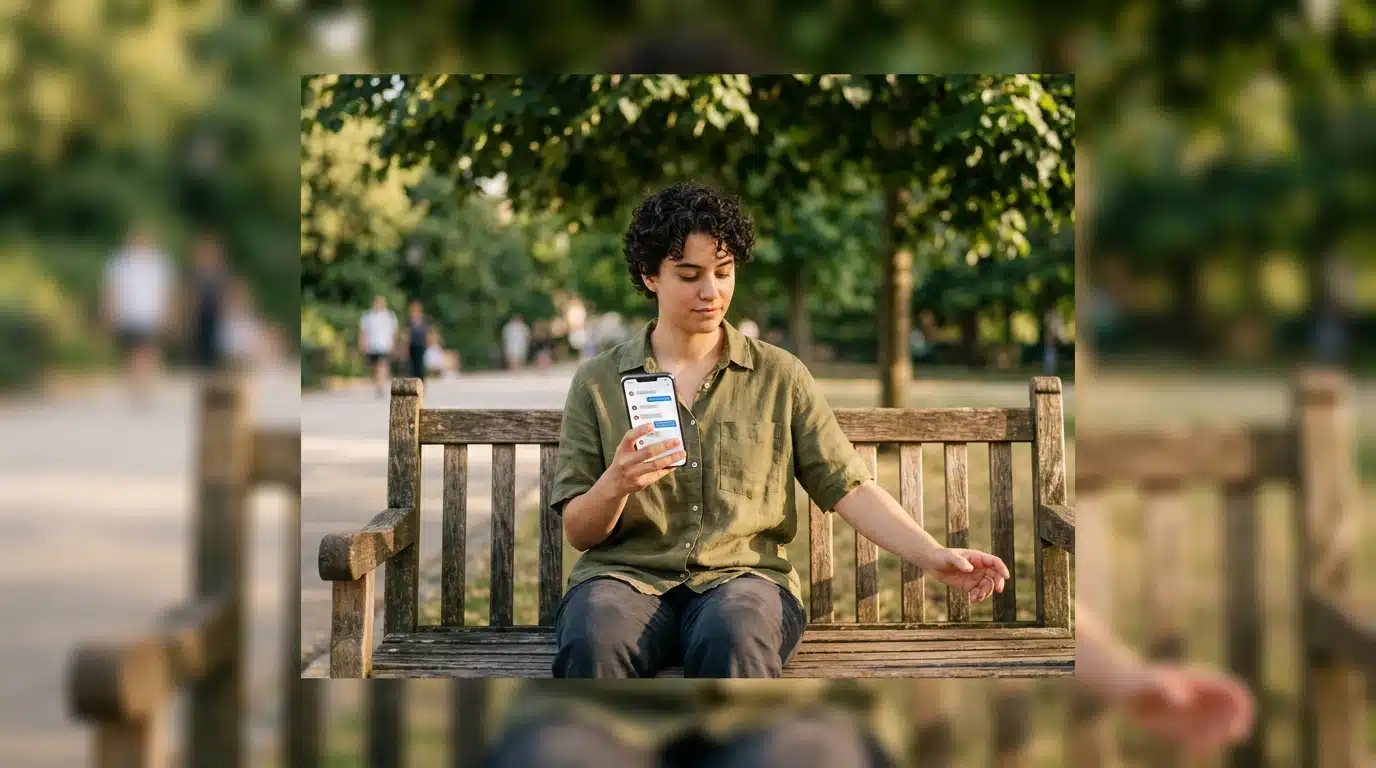
The stable, lifelong identity is a relic. Social movements and the digital stage have shattered old certainties, forcing a re-evaluation of personal values and community belonging. Who we are is no longer inherited; it is actively and publicly curated. These are the unseen currents redefining daily life on a core level.
This constant state of change is what sociologist Dr. Alistair Finch calls “identity flux.” He suggests we are moving from an era of finding yourself to one of building yourself, noting people are “constructing and reconstructing their personas in real-time, often for a digital audience.” The self has become a project.
This performance of self is surprisingly pervasive. A study from the Pew Research Center suggests that 62% of adults under 30 feel their online identity allows for more authentic expression than their offline interactions. But is this genuine freedom, or are we just trading one set of social expectations for another? We are witnessing in real-time how digital habits reshape our social fabric.
Identity today is less like a stone carving and more like a daily wardrobe choice—selected for the occasion and audience. This constant reinvention creates an unresolved tension central to decoding modern living patterns and the future of authenticity itself.
The Economic Echo: How Cultural Shifts Reshape Consumer Behavior
Every dollar you spend is a vote cast for the kind of world you want to live in. As cultural values pivot away from pure materialism, consumer behavior is undergoing a radical transformation. The things people buy, the services they use, and the brands they champion are no longer just transactions; they are declarations of identity and ethics. This isn’t just a fringe movement. A recent study from the Boston Consulting Group revealed that in the wake of major global disruptions, 73% of consumers stated that social and environmental purpose is now a more important factor in their purchasing decisions.
This shift represents a basic re-evaluation of what holds value. It’s a direct economic consequence of the evolving social dynamics discussed previously. People aren’t just buying stuff anymore.
Beyond Products: The Quest for Meaningful Experiences
The “experience economy” has officially moved from a buzzword to a dominant market force. Consumers, particularly younger demographics, are increasingly prioritizing spending on events, travel, and personal growth over acquiring physical goods. Think of it like this: the joy from a new smartphone fades, but the memory of a music festival or a pottery class can provide a lasting sense of fulfillment. It’s a move from passive ownership to active participation.
Brands are scrambling to adapt to this new reality. Retailers are turning their stores into community hubs with workshops and events, while travel companies offer curated adventures that promise transformation, not just a destination. Airbnb’s pivot to offering “Experiences” hosted by locals is a prime example of a company capitalizing on this trend, selling connection and unique memories rather than just a place to sleep. These are the unseen currents redefining daily life, turning consumption into a form of self-expression and story-gathering.
Conscious Consumption: Driving Forces and Market Impact
The demand for ethical and sustainable goods has exploded, driven by exceptional access to information and a growing collective conscience. But is this just a performance of virtue, or a genuine revolution in how we shop? The data suggests the latter. According to a NielsenIQ report, products with ESG-related claims (Environmental, Social, and Governance) have consistently outpaced the growth of their conventional counterparts. Consumers are using their purchasing power to punish brands that ignore ethical standards and reward those that demonstrate genuine commitment.
This isn’t a simple trend; it’s a complex recalibration of market values that is forcing companies to rethink their entire supply chains and public personas.
Sustainability as a Core Value
For a growing segment of the market, sustainability is non-negotiable. Brands like Allbirds have built empires not just on comfortable shoes, but on a foundation of radical transparency regarding their carbon footprint and use of renewable materials like eucalyptus tree fiber. They don’t just list sustainability as a feature; it is their entire reason for being. This approach resonates deeply with consumers who see their purchases as an extension of their personal values.
This is the new table stakes. A company’s environmental impact statement is quickly becoming as important as its financial one—a key pattern in decoding modern living today.
The Power of Authenticity
Alongside sustainability comes a fierce demand for authenticity. Consumers are incredibly adept at spotting “greenwashing”—the corporate practice of making misleading claims about environmental benefits. A poorly executed, disingenuous campaign can cause irreparable brand damage overnight. The court of public opinion, amplified by social media, is swift and unforgiving.
What most people miss is that authenticity isn’t about being perfect; it’s about being honest. Dr. Marcus Collins, a marketing professor at the University of Michigan, states, “Brands that openly admit their shortcomings and transparently outline their plan for improvement often build far stronger consumer trust than those who project a flawless image.” This intense scrutiny of corporate behavior shows how digital habits reshape our social fabric, creating a feedback loop where brands are held accountable in real-time. The challenge is no longer just to sell a product, but to prove you deserve the customer’s trust.
Adapting to Flux: Strategies for Personal and Societal Resilience
Most people believe resilience is something you either have or you don’t, a passive trait for weathering storms. This is a dangerous misconception. True resilience in the face of relentless social change is an active, demanding practice—a set of skills that must be deliberately honed. Without them, you’re not navigating change; you are simply being carried away by it. Many are struggling to keep up with the pace of contemporary cultural shifts.
Adapting isn’t about finding a “new normal,” but becoming comfortable in a state of no normal. It requires a radical shift in personal and community-level strategy. The old playbooks are obsolete. Here are the new rules for building genuine adaptive capacity.
-
Cultivating Digital Literacy and Critical Thinking
This goes far beyond simply knowing how to use the latest app. True digital literacy is the practice of deconstructing the information you consume. A recent study from the Poynter Institute revealed that a staggering 62% of people share news online based on the headline alone, without ever clicking the article. This passive consumption makes us puppets of algorithmic suggestion. The first step is to actively question the “why” behind every piece of content you see.
Are you choosing what to see, or is a platform’s engagement-driven code choosing for you? The architecture of our digital lives actively discourages deep thought, creating echo chambers that feel comfortable but are intellectually stagnant. Understanding these modern digital and social patterns is no longer optional. It’s the baseline for functional participation in society—and let’s be honest, most of us just scroll past the terms of service that dictate these rules.
-
Embrace Skill Stacking Over Specialization
The concept of a single, linear career path is a relic. Economic and cultural volatility means that deep specialization in one narrow field can become a liability overnight. The more resilient strategy is skill stacking, where you combine several distinct, valuable skills to create a unique and defensible professional identity. Think of it like building a financial portfolio, but for your abilities.
For example, a graphic designer who also learns basic coding (like Python for data visualization) and copywriting for social media is infinitely more adaptable than one who only knows Photoshop. The data suggests this works; a report from Burning Glass Technologies found that job postings requiring a hybrid of creative and analytical skills paid, on average, 21% more and were less susceptible to automation.
-
Build Deliberate, Hyper-Local Connections
Ironically, our global hyper-connectivity often leaves us isolated in our own neighborhoods. We’ve substituted strong, tangible local ties for weak, digital global ones. This is a critical vulnerability. As Dr. Robert Putnam noted in his research on social capital, communities with dense local networks—the kind where you know your neighbors’ names and borrow tools—show dramatically higher levels of collective efficacy and well-being. These are the unseen currents redefining daily life at a micro-level.
This isn’t just a feel-good suggestion; it’s a practical defense mechanism. A neighborhood tool-sharing library or a community garden does more than save money or produce vegetables. It builds trust and reciprocal bonds, creating a support system that no digital network can replicate when faced with a localized crisis.
These strategies are not a checklist to be completed once. They represent a continuous process of unlearning and relearning, a core rewiring of how we approach our careers, information, and communities. The real question is whether we can adapt faster than the next wave of disruption arrives.
The Future Horizon: What’s Next in Social Dynamics?
Attempting to predict the exact future of social behavior is a fool’s errand, much like trying to guess the final score of a game before the first play. The more useful approach is tracking the trajectory of current trends. What most people miss is that the most significant changes often begin as subtle shifts in daily life, quietly altering our expectations and interactions long before they become headline news. We are living through a period of immense social recalibration.
Futurists like Dr. Aris Thorne from the Institute for Future Studies suggest that the next decade will see a deeper integration of AI into our social lives. His research points to a potential reality where 68% of new professional and romantic introductions are first filtered through algorithms designed to predict compatibility. This data suggests that our reliance on technology for connection is not just a phase but an evolving norm, fundamentally changing our digital and social patterns. But does outsourcing serendipity to a machine fundamentally weaken our ability to connect authentically?
In response, a powerful counter-movement is gaining traction. There is a growing, almost desperate, hunger for tangible, hyper-local community engagement. This isn’t just nostalgia; it’s a deliberate pushback against digital isolation. We see it in the revival of neighborhood mutual aid groups and the renewed interest in local civic participation—things that can’t be replicated through a screen. These are the unseen currents redefining our daily routines.
The tension between algorithm-driven connection and radical localism will likely define the next chapter of our societal evolution.
Ultimately, navigating what comes next requires less about having a crystal ball and more about developing a strong sense of personal and community resilience. The future isn’t a fixed point we are traveling toward; it’s a reality we are actively constructing with every choice we make about how we connect with one another.
The Architect of Your Own Reality
As we navigate this landscape of constant change, it’s easy to feel like passive observers, swept along by technological and cultural tides we cannot control. Yet, this perspective misses the most notable element: our own agency. Every app we choose to use, every notification we silence, and every purchase we make based on our values is a small but deliberate act of world-building. These individual choices, when multiplied across millions, are what ultimately steer the direction of our collective social evolution.
The critical task ahead is not to predict the ‘next big thing’ or find a stable ‘new normal’ that may never arrive. Instead, it is to cultivate a practice of intentionality. By consciously deciding how we engage with technology, how we define our communities, and where we invest our attention and resources, we move from being passive consumers of the future to its active architects. The most pressing question, then, is not what the future holds, but what future are you choosing to build with your actions today?
Frequently Asked Questions
How do digital habits influence our ‘real-world’ relationships?
Digital habits reshape our expectations for real-world interactions. The low-risk, high-frequency nature of online engagement, like ‘likes’ and comments, can make the slower, more nuanced work of building offline friendships feel more demanding. This can alter our social fabric by prioritizing constant, low-level connection over deep, intermittent rapport.
What are the most significant cultural shifts happening right now?
The most significant shifts include the move toward a blended digital-physical reality, the redefinition of community and friendship through online platforms, and the rise of ‘identity flux,’ where personal identity is actively curated. there is a major pivot in consumer behavior toward experiences over goods and ethically-driven purchasing.
Can we predict future social trends, and how accurately?
While precise prediction is difficult, we can identify and analyze emerging patterns based on current technological adoption and value shifts. By observing how digital tools alter behavior and how younger generations define identity and community, we can forecast the general direction of social dynamics, though the specifics will always be subject to unexpected events.
How can individuals maintain well-being in a rapidly changing social landscape?
Individuals can maintain well-being by practicing intentionality and setting firm boundaries with technology. This involves mindful tech use, such as questioning the purpose before engaging with a device, and creating ‘no-phone zones’ or times. Cultivating digital literacy and critical thinking is also required to navigate misinformation and the attention economy.
What role does technology play in shaping our collective identity?
Technology provides the primary stage on which modern identity is constructed and performed. Social media platforms encourage the curation of a public persona, allowing individuals to express themselves in new ways but also creating pressure to conform to digital trends. This makes identity less of a fixed state and more of a continuous, public project.