Achieve Digital-Life Balance in 2026: Your 5-Step Guide to Reclaiming Time

In an increasingly hyper-connected world, the quest for digital-life balance has never been more critical. As we step into 2026, the lines between our online and offline existences continue to blur, making it challenging to maintain focus, productivity, and overall well-being. The constant barrage of notifications, endless scrolling, and the pressure to be ‘always on’ can lead to digital fatigue, stress, and a diminished quality of life. But what if 2026 could be the year you finally reclaim your time and establish a healthier, more sustainable relationship with technology?
This comprehensive guide offers practical solutions and a clear 5-step framework to help you achieve genuine digital-life balance. It’s not about abandoning technology entirely, but rather about intentional usage, setting boundaries, and cultivating habits that serve your well-being, rather than detracting from it. Let’s embark on this journey to a more balanced and fulfilling life.
Understanding the Digital Dilemma: Why Digital-Life Balance Matters More Than Ever
Before diving into solutions, it’s essential to grasp the profound impact our digital habits have on our lives. The rise of smartphones, social media, and remote work has fundamentally reshaped how we interact, work, and even relax. While these advancements offer undeniable benefits—instant communication, access to information, and unprecedented convenience—they also present a unique set of challenges to our mental, physical, and emotional health.
The average adult spends several hours a day glued to screens, a figure that has steadily climbed over the past decade. This constant digital engagement can lead to:
- Increased Anxiety and Stress: The fear of missing out (FOMO), social comparison, and the relentless stream of information can trigger anxiety and heighten stress levels.
- Reduced Attention Span: Our brains are being rewired for constant stimulation, making it harder to focus on single tasks and engage in deep work or sustained conversations.
- Sleep Disturbances: Blue light emitted from screens interferes with melatonin production, disrupting sleep patterns and leading to fatigue.
- Physical Health Issues: Sedentary lifestyles, poor posture, and eye strain are common consequences of excessive screen time.
- Strained Relationships: Prioritizing digital interactions over in-person connections can erode real-world relationships.
- Decreased Productivity: Despite being ‘connected,’ constant interruptions and multitasking often lead to less, not more, effective work.
Achieving digital-life balance is not merely a trend; it’s a necessity for thriving in the 21st century. It’s about consciously choosing how and when technology serves you, rather than becoming its servant. By taking proactive steps, you can mitigate these negative effects and harness technology as a tool for empowerment, not a source of distraction.
Step 1: Conduct a Digital Audit – Awareness is the First Step to Digital-Life Balance
You can’t fix what you don’t measure. The first crucial step towards achieving digital-life balance in 2026 is to understand your current digital habits. Many of us underestimate the amount of time we spend online, or the specific apps and activities that consume our attention. A digital audit provides a clear, objective picture.
How to Perform Your Digital Audit:
- Track Your Screen Time: Most smartphones have built-in screen time trackers (e.g., ‘Screen Time’ on iOS, ‘Digital Wellbeing’ on Android). Utilize these tools to monitor your daily and weekly usage across different apps and categories. Pay attention to peaks and troughs.
- Identify Your Digital Triggers: What prompts you to pick up your phone or open a specific app? Is it boredom, stress, a notification, or a habit? Understanding these triggers is key to breaking unproductive patterns.
- Analyze Your App Usage: Which apps consume the most time? Are they productivity tools, social media, entertainment, or news? Categorize them into ‘essential,’ ‘beneficial,’ and ‘time-wasting.’
- Journal Your Feelings: For a few days, make a note of how you feel before, during, and after using certain digital platforms. Do they leave you feeling informed, connected, inspired, or drained, anxious, or envious?
- Review Notification Overload: Count the number of notifications you receive in a day. Are they all truly necessary or urgent?
This audit isn’t about judgment; it’s about gaining insight. Be honest with yourself. You might be surprised by what you discover about your digital footprint. This foundational understanding will empower you to make informed decisions in the subsequent steps towards a better digital-life balance.
Step 2: Define Your Digital Boundaries – Setting the Rules for a Healthier Digital-Life Balance
Once you understand your digital habits, the next step is to establish clear, firm boundaries. Think of these as the rules of engagement for your relationship with technology. Without boundaries, technology will inevitably encroach on every aspect of your life, making true digital-life balance impossible.
Practical Boundary-Setting Strategies:
- No-Phone Zones: Designate specific areas in your home as phone-free, such as the dining table, bedroom, or bathroom. This creates sacred spaces for connection, rest, and personal reflection.
- Digital-Free Times: Implement specific periods each day or week where you completely disconnect. This could be the first hour after waking up, the last hour before bed, during meals, or a dedicated ‘digital Sabbath’ on weekends.
- Notification Management: Turn off all non-essential notifications. Only allow alerts from truly critical contacts or work applications. Consider using ‘Do Not Disturb’ modes strategically.
- Scheduled Digital Check-ins: Instead of constantly checking emails or social media, allocate specific times of the day for these activities. For example, check emails at 9 AM, 1 PM, and 4 PM, and social media for 15 minutes in the evening.
- App Limits: Use your phone’s built-in features or third-party apps to set daily time limits for specific applications, especially those you identified as ‘time-wasting’ during your audit.
- Communicate Your Boundaries: Inform family, friends, and colleagues about your new digital boundaries, especially if they impact response times. Transparency can foster understanding and respect.
Setting boundaries requires discipline and consistency. It might feel uncomfortable at first, but stick with it. The long-term benefits for your focus, peace of mind, and overall digital-life balance are immense.

Step 3: Cultivate Mindful Digital Consumption – Intentionality for Better Digital-Life Balance
Beyond simply limiting screen time, it’s crucial to change how you engage with technology. Mindful digital consumption means being present and intentional with every interaction, rather than mindlessly scrolling or reacting to every ping. This shift in mindset is pivotal for achieving sustainable digital-life balance.
Strategies for Mindful Digital Use:
- Question Your Intent: Before opening an app or clicking a link, ask yourself: “Why am I doing this? What’s my purpose?” If the answer isn’t clear or it’s simply to fill a void, consider choosing a non-digital activity instead.
- Engage Actively, Not Passively: When consuming content, try to engage actively. Read articles thoroughly, watch videos with full attention, and participate in discussions thoughtfully. Avoid passive, endless scrolling.
- Curate Your Digital Environment: Unfollow accounts that make you feel anxious, envious, or unproductive. Delete apps you no longer use. Organize your digital files and inbox. A decluttered digital space leads to a decluttered mind.
- Practice Single-Tasking: When working or engaging with digital content, focus on one task at a time. Close unnecessary tabs and apps. This improves concentration and reduces cognitive overload.
- Take Regular Digital Breaks: Implement the ‘Pomodoro Technique’ or similar methods, where you work for focused periods (e.g., 25 minutes) followed by short breaks. During breaks, step away from all screens.
- Use Technology as a Tool, Not a Crutch: Remind yourself that technology is there to serve you. Use productivity apps to enhance your work, communication tools to connect meaningfully, and educational platforms to learn. Don’t let it become a substitute for real-world experiences or a coping mechanism for discomfort.
Mindfulness in your digital interactions helps you regain control and ensures that technology genuinely enhances your life, rather than detracting from your pursuit of digital-life balance.
Step 4: Prioritize Offline Activities – Reclaiming Your Time for Meaningful Digital-Life Balance
A true digital-life balance isn’t just about reducing screen time; it’s equally about filling that reclaimed time with enriching offline activities. Nature abhors a vacuum, and if you simply cut back on digital use without replacing it with something else, you’re likely to revert to old habits. This step is about intentionally scheduling and engaging in activities that nourish your mind, body, and soul.
Ideas for Enriching Offline Engagement:
- Connect with Nature: Spend time outdoors. Go for walks, hikes, gardening, or simply sit in a park. Nature has a profound calming effect and can significantly reduce stress.
- Nurture Real-World Relationships: Schedule face-to-face meetups with friends and family. Engage in deep conversations without the distraction of devices. Participate in community events or volunteer work.
- Rediscover Hobbies and Passions: Dedicate time to activities you love but might have neglected due to digital distractions – reading physical books, painting, playing a musical instrument, cooking, crafting, or playing board games.
- Prioritize Physical Activity: Exercise is a powerful antidote to digital fatigue. Engage in sports, yoga, dancing, or any form of movement that you enjoy.
- Practice Mindfulness and Meditation: Beyond just taking a digital break, actively practice mindfulness. Even 10-15 minutes of meditation or deep breathing can significantly improve focus and reduce anxiety.
- Engage in Creative Pursuits: Whether it’s writing, drawing, photography, or learning a new skill, creative activities stimulate different parts of your brain and provide a sense of accomplishment.
- Dedicated ‘Thinking Time’: Set aside time specifically for reflection, planning, or simply letting your mind wander without any digital input. This can foster creativity and problem-solving.
By actively investing in your offline life, you create a compelling reason to disconnect and build a robust foundation for sustainable digital-life balance. These activities not only fill the void left by reduced screen time but also contribute significantly to your overall happiness and well-being.
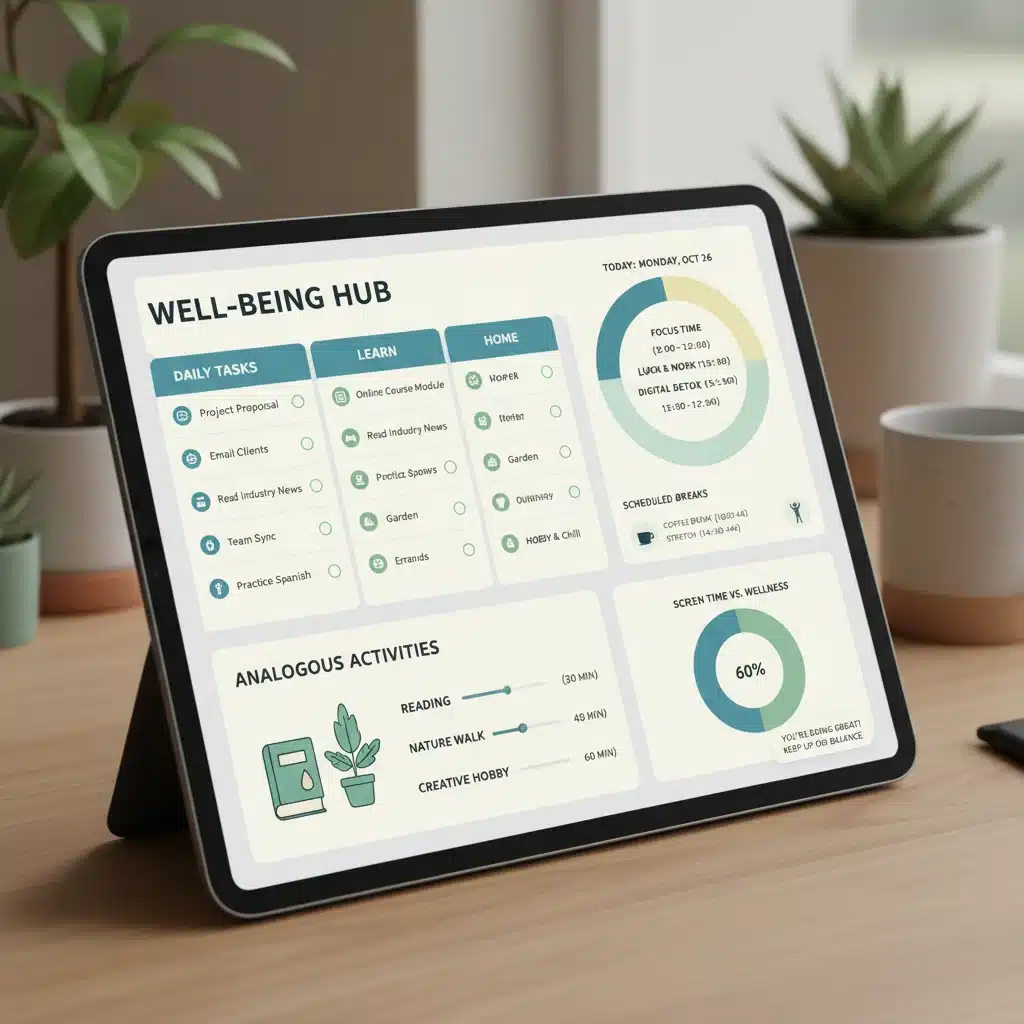
Step 5: Embrace Digital Detoxes and Regular Review – Sustaining Your Digital-Life Balance
Achieving digital-life balance isn’t a one-time event; it’s an ongoing process that requires continuous effort and adaptation. The final step in our guide focuses on making these practices sustainable, incorporating periodic resets, and regularly evaluating your progress.
Strategies for Sustained Digital-Life Balance:
- Schedule Regular Digital Detoxes: Periodically, commit to a longer period of complete digital disconnection. This could be a full day each month, a weekend every quarter, or even a week during vacation. These detoxes act as a reset button, helping you appreciate the non-digital world and reinforce your boundaries.
- Utilize Technology to Support Your Goals: Paradoxically, technology can help you achieve digital-life balance. Use apps for meditation, habit tracking, or scheduling offline activities. Set reminders for breaks or to log off.
- Create a ‘Go-To’ Offline Activity List: When you feel the urge to pick up your phone out of boredom or habit, have a pre-planned list of offline activities you can immediately turn to. This reduces decision fatigue.
- Practice Self-Compassion: There will be days when you slip up, spend too much time online, or fall back into old habits. Don’t beat yourself up. Acknowledge it, learn from it, and gently redirect yourself back to your goals. Progress, not perfection, is the aim.
- Educate and Share: Talk to friends and family about your journey. Sharing your experiences can inspire others and create a supportive environment for maintaining your digital-life balance.
- Regularly Review and Adjust: Every few months, revisit your digital audit and assess how well your boundaries and habits are working. Are there new apps or platforms distracting you? Do your boundaries need adjustment as your life circumstances change? The digital landscape evolves, and so should your strategy.
By integrating these practices into your routine, you create a robust framework for long-term digital-life balance. Remember, the goal is not to eliminate technology, but to integrate it mindfully into a life rich with real-world experiences, meaningful connections, and personal well-being.
The Path Forward: Embracing a Balanced Digital Future in 2026
The journey to achieving digital-life balance is a personal one, unique to each individual. As we navigate 2026 and beyond, the digital tools at our disposal will only become more sophisticated and pervasive. However, our ability to control and direct their influence remains firmly in our hands.
By following this 5-step guide—conducting a digital audit, defining clear boundaries, practicing mindful consumption, prioritizing offline activities, and embracing regular detoxes and reviews—you are not just reducing screen time; you are actively investing in your mental clarity, emotional resilience, and overall happiness. You are reclaiming your attention, your time, and ultimately, your life from the endless demands of the digital world.
Start small, be consistent, and celebrate every victory, no matter how minor. Your commitment to a healthier digital-life balance will pay dividends in every facet of your existence, allowing you to truly thrive in the modern age. Make 2026 the year you master your digital world, instead of letting it master you.
What steps will you take today to begin your journey towards a better digital-life balance?