Future Wearable Tech: 7 Devices Transforming Daily Life by 2026

The Future of Wearable Tech: 7 New Devices Expected to Transform Your Daily Routine by Late 2026
The landscape of personal technology is in a constant state of flux, evolving at an unprecedented pace. What was once confined to the realm of science fiction is now becoming an integral part of our daily lives. Wearable technology, in particular, stands at the forefront of this revolution, promising to redefine how we interact with our environment, manage our health, and enhance our overall well-being. By late 2026, we anticipate a new wave of devices that will not only improve upon existing concepts but also introduce entirely novel functionalities, seamlessly blending into our routines to offer an experience that is both intuitive and indispensable. This article delves into the exciting prospects of future wearable tech, exploring seven groundbreaking devices that are set to transform our daily existence.
The journey of wearable technology began with simple fitness trackers and smartwatches, focusing primarily on activity monitoring and basic notifications. However, the next few years will witness a significant leap, driven by advancements in artificial intelligence, miniaturization, sensor technology, and connectivity. These emerging devices are designed to be more discreet, more powerful, and more integrated, moving beyond mere data collection to offer proactive insights, personalized interventions, and immersive experiences. The goal is to create a symbiotic relationship between humans and technology, where devices anticipate our needs, adapt to our preferences, and ultimately empower us to live healthier, more productive, and more connected lives.
As we approach 2026, the convergence of various technological breakthroughs will give rise to wearables that are not just accessories but extensions of ourselves. Imagine devices that can predict illnesses before symptoms appear, guide you through complex tasks with augmented reality, or even enhance your cognitive abilities. This isn’t a distant dream; it’s the near future. Our exploration will cover a range of categories, from advanced health monitoring systems to intelligent sensory augmentation, providing a glimpse into the innovations that will shape the next chapter of wearable technology. Prepare to discover how these devices will fundamentally alter the way we perceive, interact with, and navigate the world around us.
1. Hyper-Personalized Health Monitoring Smart Patches
The era of generic health advice is rapidly fading, making way for hyper-personalized health solutions. By late 2026, we expect to see advanced smart patches emerge as a leading form of future wearable tech for continuous and comprehensive health monitoring. Unlike current wearables that offer basic heart rate or step counting, these next-generation patches will be capable of an astonishing array of physiological measurements.
Unprecedented Data Collection
These smart patches, often no larger than a bandage, will adhere discreetly to the skin, continuously collecting a wealth of biometric data. This includes not only advanced cardiovascular metrics like continuous ECG, blood pressure, and arterial stiffness, but also sophisticated biochemical markers. Imagine a patch that can non-invasively monitor glucose levels for diabetics with medical-grade accuracy, track hydration status, analyze lactate levels during exercise, or even detect early signs of infection through changes in inflammatory markers.
AI-Driven Insights and Predictive Analytics
The true power of these devices lies not just in data collection but in their ability to interpret this data through advanced artificial intelligence algorithms. These AI systems will learn an individual’s unique physiological baseline, identifying subtle deviations that could indicate an impending health issue. For example, a patch might detect a slight increase in specific biomarkers combined with changes in sleep patterns and heart rate variability, prompting an alert about potential stress-induced fatigue or even the onset of a viral infection, long before symptoms become apparent. This predictive capability will empower individuals to take proactive steps to manage their health, consult healthcare professionals earlier, and prevent conditions from escalating.
Seamless Integration with Healthcare
Beyond personal use, these smart patches will facilitate seamless integration with healthcare systems. Data could be securely shared with doctors, allowing for remote patient monitoring, personalized treatment plans, and early intervention for chronic conditions. This level of continuous, real-time data will transform preventive medicine, moving healthcare from reactive to highly proactive. The discreet nature and ease of use will make these patches a staple for elderly care, chronic disease management, and even high-performance athletes seeking to optimize their training and recovery.
2. Augmented Reality (AR) Contact Lenses for Daily Information Overlay
While AR glasses have made strides, their adoption has been limited by form factor and social acceptance. The next significant leap in future wearable tech will be the advent of fully functional augmented reality contact lenses, expected to become a reality for early adopters by 2026. These lenses will move beyond mere visual enhancements, offering a complete, immersive, yet unobtrusive information overlay directly onto our field of vision.
Invisible Information, Everywhere
Imagine walking down a street and seeing real-time navigation directions subtly overlaid onto the pavement, or instantly identifying landmarks with contextual information appearing beside them. These AR contact lenses will be powered by micro-LED displays and advanced optics, projecting digital content directly onto the retina. They will connect wirelessly to a pocket-sized processing unit (perhaps your smartphone or a dedicated device), which handles the heavy computational load. This means no bulky glasses, no screens to look at – just a seamless integration of digital information with your natural vision.
Enhanced Productivity and Communication
For professionals, these lenses could display real-time data during presentations, provide instant translations of foreign languages as you read text or converse, or even show caller ID and message notifications discreetly in your peripheral vision. During a meeting, relevant statistics or attendee profiles could appear, enhancing your ability to engage and respond effectively. For personal use, they could offer personalized shopping information, real-time public transport updates, or even subtle reminders for tasks and appointments, all without breaking your focus from the real world.
Gaming and Entertainment
The entertainment potential is immense. Imagine playing an AR game where virtual characters interact with your physical environment, or attending a live concert where holographic visuals enhance the stage performance directly before your eyes. The discreet nature of AR contact lenses will make these experiences far more personal and less conspicuous than current AR headset solutions, truly blurring the lines between the digital and physical worlds.
3. Smart Fabrics and E-Textiles for Adaptive Clothing
Clothing has always served basic functions: protection, warmth, and modesty. However, the future wearable tech paradigm will see our garments evolve into intelligent, adaptive systems. By late 2026, smart fabrics and e-textiles will move beyond niche applications into mainstream apparel, offering dynamic functionality that responds to our environment and physiological needs.
Dynamic Thermal Regulation
One of the most immediate benefits will be intelligent thermal regulation. Imagine a jacket that can actively cool you down on a hot day or warm you up when temperatures drop, without the need for additional layers or bulky insulation. These fabrics will incorporate embedded micro-heaters and coolers, controlled by sensors that monitor both your body temperature and the ambient environment. This will be revolutionary for outdoor enthusiasts, athletes, and anyone living in climates with unpredictable weather, providing unparalleled comfort and energy efficiency.
Integrated Health and Performance Monitoring
Beyond comfort, smart fabrics will become sophisticated health monitoring platforms. Shirts could continuously track heart rate, respiration, posture, and even detect early signs of fatigue or stress through changes in skin conductivity. For athletes, these garments could analyze muscle exertion, track movement patterns, and provide real-time feedback on form, helping to prevent injuries and optimize performance. The data collected would be seamlessly transmitted to your smartphone or a dedicated hub, offering a holistic view of your physical state.
Interactive and Communicative Apparel
Some smart fabrics will feature embedded flexible displays, allowing for customizable patterns, dynamic branding, or even subtle communication cues. Imagine a shirt that changes color based on your mood or displays a personalized message. Furthermore, these textiles could incorporate haptic feedback, offering gentle vibrations for navigation, notifications, or even as part of a therapeutic intervention. The integration of sensors could also extend to safety, with garments detecting falls or impacts and automatically alerting emergency services.
4. Neural Interface Headbands for Enhanced Focus and Sleep
The most profound advancements in future wearable tech often involve direct interaction with our brain. By 2026, neural interface headbands, designed for non-invasive brain activity monitoring and modulation, are expected to become commercially viable tools for cognitive enhancement and sleep optimization.
Boosting Focus and Productivity
These headbands will utilize advanced electroencephalography (EEG) sensors to read brainwave patterns. Coupled with sophisticated AI, they can detect states of concentration or distraction. When focus wanes, the headband could provide subtle neurofeedback through auditory cues, gentle vibrations, or even personalized audio stimuli designed to guide the brain back into an optimal state for learning or productivity. This isn’t about mind control but about providing real-time, personalized assistance to maintain peak cognitive performance throughout the day, helping users overcome procrastination and improve task completion.
Optimizing Sleep Cycles
Sleep is fundamental to health, and these neural headbands will offer unprecedented insights and interventions for improving it. By precisely tracking sleep stages (REM, deep sleep, light sleep), the device can provide personalized recommendations for bedtime routines, wake-up times, and even trigger subtle auditory tones or vibrations to facilitate deeper sleep or gentle awakenings. Some advanced versions might even incorporate transcranial alternating current stimulation (tACS) or similar non-invasive techniques to enhance specific brainwave frequencies associated with restorative sleep, leading to improved memory consolidation and overall well-being.
Stress Reduction and Mindfulness
Beyond focus and sleep, these headbands will be powerful tools for stress management. By monitoring brain activity associated with stress and relaxation, they can guide users through mindfulness exercises, meditation, or breathing techniques, providing real-time feedback on their effectiveness. This personalized approach to mental well-being will offer a significant advantage over generic apps, tailoring interventions to the individual’s unique brain patterns and needs.
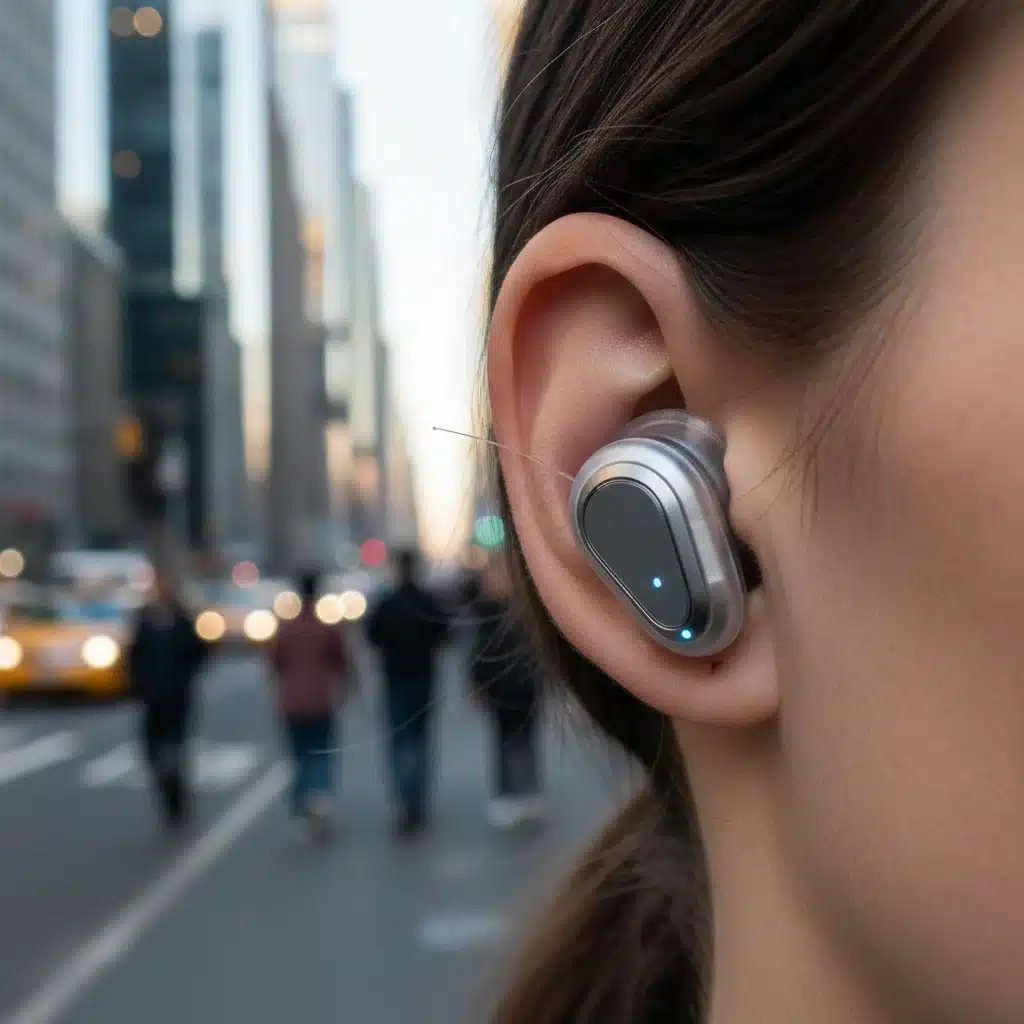
5. Smart Earbuds with Biometric Sensors and Real-time Language Translation
Smart earbuds have already revolutionized how we listen to music and take calls. However, the next generation of this future wearable tech, anticipated by 2026, will integrate a suite of advanced biometric sensors and real-time processing capabilities, transforming them into indispensable personal assistants and health monitors.
Comprehensive Biometric Tracking
Future smart earbuds will go far beyond basic heart rate monitoring. Equipped with advanced optical sensors, they will be able to track blood oxygen saturation (SpO2), body temperature, and even perform rudimentary ECGs from within the ear canal. The discreet placement inside the ear offers a stable and consistent measurement point, making them ideal for continuous health tracking during exercise, commuting, or even sleep. Imagine an earbud that alerts you to early signs of fatigue or dehydration during a run, or monitors your stress levels throughout a busy workday.
Real-time, Contextual Language Translation
One of the most exciting advancements will be near real-time, highly accurate language translation. Leveraging cloud-based AI and powerful on-device processing, these earbuds will enable seamless communication across language barriers. As someone speaks to you in a foreign language, the earbuds will translate their words into your native tongue and play them directly into your ear. Conversely, your spoken words will be translated and played back to the other person in their language, creating a natural, conversational flow. This will be a game-changer for international travel, business, and fostering global connections, truly breaking down communication barriers.
Personalized Audio and Environmental Awareness
These earbuds will also offer highly personalized audio experiences. They could adapt sound profiles based on your hearing preferences and the ambient environment, enhancing clarity for speech or enriching music. Advanced noise cancellation will intelligently distinguish between desired sounds (e.g., a conversation) and unwanted noise, allowing for selective hearing. Furthermore, integrated directional microphones and spatial audio processing will enable you to focus on specific sounds in a noisy environment, enhancing your situational awareness without needing to remove the earbuds.
6. Haptic Feedback Rings for Intuitive Navigation and Communication
The evolution of rings as future wearable tech is poised to move beyond mere aesthetics or basic notification alerts. By 2026, we anticipate the rise of haptic feedback rings that offer a new dimension of intuitive, discreet interaction with our digital world and physical environment.
Subtle, Personalized Notifications
Imagine receiving a notification not as an audible chime or a screen flash, but as a unique pattern of vibrations on your finger. These rings will utilize advanced micro-haptic actuators to deliver distinct tactile feedback for different types of alerts – a gentle tap for a message from a loved one, a sustained buzz for an important work email, or a pulsing rhythm for a calendar reminder. This allows for discreet communication and reduces the need to constantly check your phone, keeping you present in the moment while staying connected.
Intuitive Navigation and Guidance
One of the most compelling applications will be for navigation. Paired with your smartphone’s GPS, the ring could guide you through unfamiliar streets with subtle directional vibrations – a buzz on your left finger for a left turn, a buzz on your right for a right turn. This ‘silent guide’ eliminates the need to look at a screen, keeping your eyes on your surroundings and enhancing safety, especially in busy urban environments or during activities like cycling. For visually impaired individuals, this could represent a significant advancement in independent navigation.
Gesture Control and Biometric Security
Some advanced haptic rings will also incorporate micro-gesture recognition, allowing you to control smart devices, interact with AR interfaces, or answer calls with subtle finger movements. Furthermore, embedded biometric sensors (like fingerprint scanners or even micro-vein pattern recognition) could turn the ring into a powerful authentication tool for unlocking devices, making secure payments, or gaining access to restricted areas, offering a seamless and highly secure alternative to traditional passwords.
7. Bio-Integrated Smart Skin Patches for Therapeutic Delivery
While some smart patches focus on monitoring, another transformative aspect of future wearable tech will be bio-integrated smart skin patches designed for therapeutic delivery and localized treatment. These devices, expected to become more sophisticated and widely available by 2026, represent a significant leap in personalized medicine.
Precise, On-Demand Drug Delivery
These patches will move beyond simple transdermal drug delivery. They will incorporate micro-needle arrays or other advanced delivery mechanisms capable of administering precise dosages of medication directly into the bloodstream or specific tissue layers. Crucially, this delivery can be triggered on demand, either manually by the user, automatically based on biometric readings from the patch itself (e.g., releasing insulin when glucose levels spike), or remotely by a healthcare professional. This level of precision and responsiveness will revolutionize the management of chronic conditions, pain relief, and even localized cosmetic treatments.
Accelerated Healing and Recovery
For athletes or individuals recovering from injuries, specialized smart skin patches could deliver anti-inflammatory agents, growth factors, or pain relievers directly to the affected area. Some patches might even incorporate low-level electrical stimulation or targeted light therapy to accelerate tissue repair and reduce recovery times. This localized and controlled approach minimizes systemic side effects often associated with oral medications, making treatments safer and more effective.
Personalized Diagnostics and Treatment Cycles
The integration of monitoring capabilities with therapeutic delivery will create closed-loop systems. A patch could continuously monitor a specific biomarker, and if it detects an anomaly or a need for intervention, it could automatically administer the required therapeutic agent. This personalized, adaptive treatment approach ensures that medication is delivered exactly when and where it’s needed, optimizing efficacy and patient outcomes. Imagine a patch for allergy sufferers that monitors airborne allergens and preemptively releases antihistamines, or a patch for chronic pain that adjusts medication release based on real-time pain perception data.

The Broader Impact of Future Wearable Tech on Daily Life
The advent of these seven groundbreaking devices signifies more than just technological progress; it heralds a fundamental shift in how we experience and interact with the world. The impact of future wearable tech will permeate every aspect of our daily routines, from the mundane to the monumental.
Enhanced Personal Well-being and Longevity
The most profound impact will undoubtedly be on personal health and well-being. With hyper-personalized health monitoring patches, smart earbuds tracking vital signs, and neural interface headbands optimizing sleep, individuals will gain an unprecedented level of insight into their own bodies and minds. This proactive approach to health, coupled with the ability to receive timely interventions or therapeutic delivery via smart skin patches, has the potential to significantly improve preventive care, manage chronic diseases more effectively, and ultimately contribute to healthier, longer lives. The focus shifts from treating illness to maintaining wellness, empowering individuals to take an active role in their health journey.
Seamless Integration and Reduced Digital Fatigue
One of the key design philosophies behind this next generation of wearables is seamless integration. The goal is to make technology disappear into our lives, rather than constantly demanding our attention. AR contact lenses will provide information without requiring us to look down at a screen, while haptic rings will deliver notifications discreetly, allowing us to stay present in conversations and activities. Smart fabrics will adapt to our needs without conscious thought. This integration aims to reduce digital fatigue and cognitive overload, making our interactions with technology more intuitive and less intrusive, fostering a more balanced relationship with the digital world.
Increased Efficiency and Productivity
From enhanced focus provided by neural headbands to real-time translation through smart earbuds, these devices are designed to boost personal and professional productivity. The ability to access information contextually and communicate effortlessly across language barriers will streamline tasks, facilitate learning, and improve decision-making. Imagine a world where language is no longer a barrier to global collaboration, or where your focus can be maintained for extended periods, leading to higher quality work and greater innovation.
Ethical Considerations and Data Privacy
As with any transformative technology, the rise of advanced future wearable tech brings with it critical ethical considerations. The sheer volume and intimacy of data collected – from our physiological states to our brainwave patterns – raise significant questions about data privacy, security, and ownership. Companies developing these devices will face immense pressure to implement robust security measures and transparent data policies. Users, in turn, will need to be educated about the implications of sharing such personal information and empowered to control who has access to their data. Regulatory bodies will likely play an increasing role in establishing guidelines and safeguards to protect individuals in this new era of hyper-connected living.
Accessibility and Inclusivity
While the focus is often on high-end innovation, the potential for these wearables to enhance accessibility for individuals with disabilities is immense. AR contact lenses could assist the visually impaired with navigation and object recognition, haptic rings could provide discreet alerts for the hearing impaired, and smart patches could offer vital health monitoring for those with limited mobility. Ensuring that these technologies are developed with inclusivity in mind from the outset will be crucial to maximizing their positive societal impact and preventing a new digital divide.
Conclusion: A Glimpse into a Connected Future
The journey towards late 2026 promises to be an exhilarating one, marked by the rapid evolution of future wearable tech. The devices we’ve explored – from hyper-personalized health monitoring patches and AR contact lenses to smart fabrics, neural interface headbands, intelligent earbuds, haptic rings, and therapeutic skin patches – represent a convergence of cutting-edge research and practical application. These innovations are not mere gadgets; they are poised to become seamless extensions of ourselves, enhancing our capabilities, safeguarding our health, and enriching our daily experiences in ways we are only just beginning to imagine.
As these technologies mature and become more integrated, they will redefine our relationship with information, our bodies, and each other. The future of wearable tech is not just about convenience; it’s about empowerment, personalization, and a more intuitive interaction with the world. While challenges related to privacy, ethics, and accessibility will undoubtedly arise, the potential for these devices to foster a healthier, more connected, and more efficient society is undeniable. Prepare for a future where technology doesn’t just assist us, but truly becomes a part of us, transforming every facet of our daily routine by late 2026 and beyond.