
Ethical AI in Daily Life: 4 Key Considerations for Consumers in 2026
The year is 2026, and Artificial Intelligence (AI) is no longer a futuristic concept confined to science fiction novels or specialized laboratories. It’s an integral part of our daily existence, from the personalized recommendations on our streaming services to the sophisticated algorithms powering our smart homes, healthcare diagnostics, and even our transportation systems. While AI promises unprecedented convenience, efficiency, and innovation, its pervasive integration also brings forth a complex web of ethical dilemmas. For consumers, understanding these challenges is not just an academic exercise; it’s a fundamental aspect of navigating the modern digital landscape responsibly and protecting individual rights.
As AI systems become more autonomous and influential, the need for informed decision-making among consumers has never been more critical. This article delves into four paramount ethical AI consumer considerations that every individual should be aware of in 2026. By exploring data privacy, algorithmic bias, transparency, and accountability, we aim to equip you with the knowledge to interact with AI technologies thoughtfully and advocate for a more equitable and ethical digital future.
The rapid evolution of AI demands a proactive approach from both developers and users. While developers bear the primary responsibility for building ethical AI, consumers play a vital role in shaping its trajectory through their choices, demands, and awareness. Let’s embark on this journey to understand the ethical dimensions of AI that are shaping our world.
1. Data Privacy: The Foundation of Trust in AI
In 2026, data is often referred to as the new oil, fueling the vast engines of AI. Every interaction we have with digital services, every click, every search, every purchase, every spoken command to a virtual assistant, generates data. This data is then fed into AI algorithms, allowing them to learn, adapt, and personalize experiences. While personalization can be incredibly beneficial, enhancing user experience and providing tailored solutions, it also raises significant concerns about data privacy. For consumers, understanding the implications of data collection and usage by AI systems is the first and arguably most crucial ethical AI consumer consideration.
The Scope of Data Collection
AI systems today collect an astonishing array of personal information. This includes, but is not limited to, demographic data, browsing history, location data, biometric data (facial recognition, fingerprints, voiceprints), health information from wearables, financial transactions, and even emotional states inferred from tone of voice or facial expressions. The sheer volume and granularity of this data mean that AI can construct incredibly detailed profiles of individuals, often without their full comprehension or explicit consent for every specific use case.
Consider smart home devices that listen for commands, fitness trackers that monitor heart rate and sleep patterns, or even smart vehicles that record driving habits and routes. Each of these devices, powered by AI, continuously gathers data. The question then becomes: who owns this data? How is it stored? Who has access to it? And for what purposes is it being used?
Consent and Control
A cornerstone of data privacy is informed consent. In an ideal world, consumers would have a clear, concise understanding of what data is being collected, why it’s being collected, how it will be used, and with whom it will be shared. They would then have the genuine choice to opt-in or opt-out. However, the reality in 2026 is often far more opaque. Terms and conditions are frequently lengthy and complex, making it difficult for average users to fully grasp the implications of their agreement. Furthermore, the notion of ‘implied consent’ or ‘necessary data for service functionality’ can often erode genuine user control.
Consumers must actively seek out and understand privacy policies. They should question companies about their data retention policies and their practices regarding data anonymization and aggregation. The ability to easily access, correct, or delete personal data held by AI systems is a critical right that needs to be championed and enforced.
Data Security and Breaches
Beyond collection and usage, the security of personal data is paramount. As AI systems process vast amounts of sensitive information, they become attractive targets for cyberattacks. A data breach involving an AI-powered service can expose highly personal and potentially damaging information, leading to identity theft, financial fraud, or reputational damage. The increasing sophistication of AI itself can also be leveraged by malicious actors, making the defense against such threats a constant arms race.
Consumers need to be vigilant about the security practices of the AI services they use. This includes strong password hygiene, enabling multi-factor authentication, and staying informed about news regarding data breaches. Regulatory bodies are continually working to strengthen data protection laws, but individual awareness remains a crucial defense.

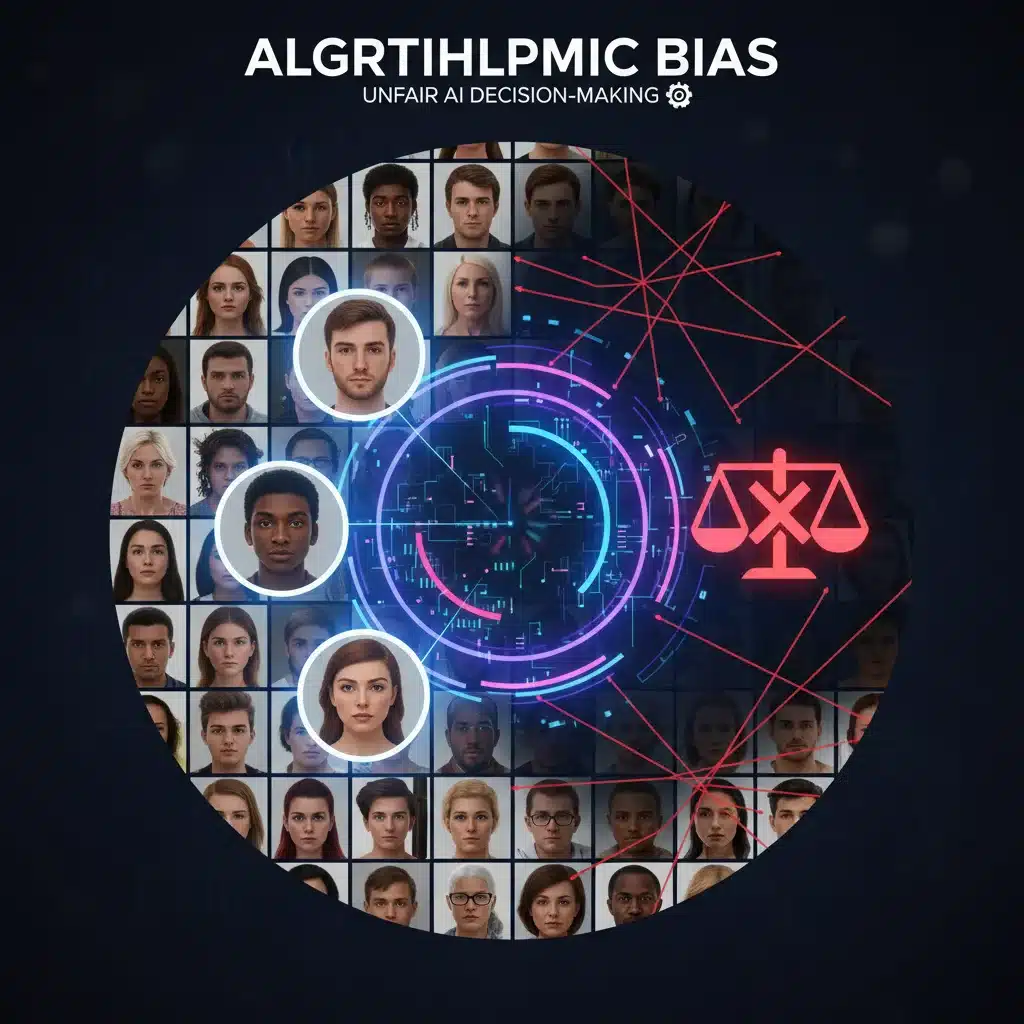
2. Algorithmic Bias: Ensuring Fairness and Equity in AI Decisions
AI systems are designed to make decisions, predictions, and recommendations based on the data they are trained on. However, if this training data reflects existing societal biases, or if the algorithms themselves are designed with inherent flaws, the AI can perpetuate and even amplify discrimination. This phenomenon, known as algorithmic bias, is a profound ethical AI consumer consideration that demands urgent attention in 2026. The consequences of biased AI can be far-reaching, affecting everything from credit scores and job applications to criminal justice and healthcare.
Sources of Algorithmic Bias
Algorithmic bias can stem from several sources:
- Data Bias: This is the most common source. If the data used to train an AI system is unrepresentative, incomplete, or reflects historical prejudices, the AI will learn and reproduce those biases. For example, if an AI for loan approval is trained predominantly on data from a specific demographic that historically received more loans, it might unfairly disadvantage applicants from underrepresented groups, even if they are creditworthy. Similarly, facial recognition systems trained primarily on lighter skin tones may perform poorly on darker skin tones, leading to misidentification and potential wrongful accusations.
- Human Bias in Design: The developers and engineers who build AI systems are not immune to their own unconscious biases. Their assumptions, the metrics they choose to optimize, and the features they select can inadvertently introduce bias into the algorithm.
- Systemic Bias: Even with unbiased data and careful design, AI can sometimes reinforce existing systemic inequalities if deployed in a biased societal context. For instance, an AI designed to optimize police patrols might inadvertently over-police certain neighborhoods if historical crime data reflects existing discriminatory policing practices.
Impact on Consumers
The impact of algorithmic bias on consumers can be severe and detrimental. Consider these examples prevalent in 2026:
- Financial Services: Biased AI in credit scoring or loan applications can lead to discriminatory lending practices, denying individuals access to essential financial resources based on their race, gender, or socioeconomic status.
- Employment: AI-powered resume screening tools might inadvertently filter out qualified candidates from certain backgrounds if their training data favors specific demographics or educational paths, limiting opportunities for diverse talent.
- Healthcare: Diagnostic AI tools trained on data from predominantly one population group might misdiagnose or provide suboptimal treatment recommendations for individuals from other groups, leading to health disparities.
- Justice System: Predictive policing AI or risk assessment tools used in sentencing can disproportionately target or penalize certain communities, reinforcing cycles of incarceration and injustice.
- Content Moderation: AI-powered content moderation can inadvertently censor or suppress voices from marginalized communities if its training data or rules are biased against certain forms of expression or cultural nuances.
As consumers, recognizing the potential for bias in the AI systems we interact with is crucial. We must question outcomes that seem unfair or discriminatory and advocate for the development of AI that is rigorously tested for bias and designed with fairness as a core principle. This includes demanding transparency about how AI decisions are made and pushing for regulatory frameworks that hold companies accountable for biased AI outcomes.
3. Transparency: Understanding How AI Works
One of the most challenging aspects of modern AI, particularly complex machine learning models like deep neural networks, is their ‘black box’ nature. It can be incredibly difficult, even for experts, to fully understand why an AI system made a particular decision or arrived at a specific recommendation. This lack of transparency is a significant ethical AI consumer consideration because it hinders our ability to identify bias, assign responsibility, and build trust. In 2026, as AI’s influence grows, the demand for explainable AI (XAI) is intensifying.
The Black Box Problem
Imagine an AI system that denies you a loan, recommends a medical treatment, or even flags you as a security risk. If the system cannot explain its reasoning in an understandable way, how can you appeal the decision? How can you verify its fairness? The black box problem makes it challenging to:
- Identify and rectify errors: If an AI makes a mistake, pinpointing the cause is nearly impossible without transparency.
- Detect bias: As discussed, bias can be subtle. Without visibility into the decision-making process, it’s hard to confirm if an outcome is truly unbiased.
- Build trust: Consumers are less likely to trust systems they don’t understand, especially when those systems have significant impacts on their lives.
- Ensure accountability: If no one can explain an AI’s decision, who is accountable when things go wrong?
The Push for Explainable AI (XAI)
The field of explainable AI (XAI) is dedicated to developing methods and techniques that allow humans to understand the output of AI systems. This doesn’t necessarily mean understanding every line of code, but rather gaining insight into the factors that influenced a decision. For consumers, this could manifest as:
- Clearer explanations for decisions: For example, an AI denying a loan might provide reasons such as ‘insufficient income history’ or ‘high debt-to-income ratio,’ rather than just a ‘denied’ status.
- Feature importance: AI systems could highlight which data points were most influential in a particular decision, allowing users to see what information the AI prioritized.
- Confidence scores: Knowing how confident an AI is in its prediction can be valuable, especially in critical applications like medical diagnosis.
- Auditable trails: Systems could maintain logs of data used and decisions made, allowing for post-hoc analysis and auditing.
Consumers should advocate for and prioritize services that offer greater transparency. When choosing between two similar AI-powered products, the one that provides clearer explanations for its actions should be favored. Regulations are also evolving to mandate certain levels of transparency, particularly in high-stakes applications, reflecting the growing importance of this ethical AI consumer consideration.
4. Accountability: Who is Responsible When AI Fails?
As AI systems become more autonomous and capable of making complex decisions, the question of accountability becomes increasingly critical. When an AI makes a mistake, causes harm, or acts in an unexpected way, who is responsible? Is it the developer, the deployer, the user, or even the AI itself? Establishing clear lines of accountability is a paramount ethical AI consumer consideration in 2026, especially as AI moves beyond recommendations to direct action.
Challenges in Assigning Accountability
The complexity of AI systems makes assigning accountability incredibly challenging:
- Distributed Responsibility: AI development often involves multiple parties: data providers, algorithm developers, platform operators, and end-users. Pinpointing a single point of failure or responsibility can be difficult.
- Emergent Behavior: Advanced AI, especially those employing deep learning, can exhibit emergent behaviors that were not explicitly programmed or foreseen by their creators. This makes it hard to blame a specific design choice for an unexpected outcome.
- Lack of Legal Precedent: Existing legal frameworks were not designed for autonomous AI agents. Laws regarding negligence, product liability, and even criminal responsibility need to be updated or reinterpreted to address AI-related incidents.
- Human-AI Collaboration: In many scenarios, AI acts as an assistant or advisor to a human operator. Determining the extent of human responsibility versus AI responsibility in such collaborative systems is complex.
The Need for Clear Frameworks
For consumers to have faith in AI systems, and for redress to be possible when things go wrong, clear frameworks for accountability are essential. This includes:
- Developer Responsibility: Companies that design and develop AI systems should be held accountable for ensuring their systems are safe, robust, and free from harmful biases. This includes rigorous testing, risk assessments, and adherence to ethical design principles.
- Deployer/Operator Responsibility: Organizations that deploy and operate AI systems in real-world settings (e.g., hospitals using diagnostic AI, companies using hiring AI) must be responsible for monitoring their performance, ensuring their proper use, and intervening when necessary.
- Auditing and Oversight: Independent auditing bodies and regulatory agencies play a crucial role in overseeing AI systems, ensuring compliance with ethical guidelines and legal requirements.
- Legal and Regulatory Reform: Governments worldwide are grappling with how to adapt existing laws and create new ones to address AI accountability. This includes discussions around AI-specific liability laws, mandatory impact assessments, and certification processes.
As consumers, we must demand clear accountability mechanisms from the companies whose AI products and services we use. This means looking for companies that publicly commit to responsible AI practices, have clear channels for reporting issues, and are transparent about their accountability frameworks. Understanding who is responsible for AI’s actions is not just about assigning blame; it’s about fostering an environment where AI is developed and deployed with the utmost care and ethical consideration.
Navigating the AI Landscape as an Informed Consumer in 2026
The integration of AI into our daily lives is an unstoppable force, bringing with it incredible potential and significant challenges. For consumers in 2026, being passively subjected to AI’s influence is no longer an option. Instead, active engagement, critical thinking, and informed decision-making are essential for navigating this new technological frontier ethically and safely.
The four ethical AI consumer considerations—data privacy, algorithmic bias, transparency, and accountability—form the bedrock of responsible AI interaction. They are interconnected pillars that support the broader goal of human-centric AI development and deployment. When you understand these considerations, you are better equipped to:
- Make informed choices: Decide which AI-powered products and services align with your values and privacy preferences.
- Protect your rights: Advocate for your data privacy and challenge unfair algorithmic decisions.
- Demand better AI: Support companies that prioritize ethical AI development and push for greater transparency and accountability across the industry.
- Shape the future: Contribute to the ongoing dialogue about how AI should be governed and integrated into society.
As technology continues its relentless march forward, the ethical landscape of AI will undoubtedly evolve. New challenges will emerge, and existing ones will deepen. Therefore, continuous learning and adaptation are key. Stay informed about new AI developments, engage in discussions about AI ethics, and use your voice as a consumer to influence the direction of this transformative technology.
The future of AI is not predetermined; it is shaped by the collective actions and demands of its users. By prioritizing these ethical considerations, consumers can help ensure that AI serves humanity’s best interests, fostering a future where innovation is balanced with responsibility, and technology empowers rather than diminishes us. Let’s embrace the potential of AI, but let’s do so with our eyes wide open, guided by a strong ethical compass.
The journey towards truly ethical AI is a collaborative one, requiring input from technologists, ethicists, policymakers, and, crucially, the everyday consumer. Your awareness and demands are powerful tools in shaping a digital world that is not only intelligent but also fair, just, and respectful of individual dignity and rights. Embrace these ethical AI consumer considerations as your guide in 2026 and beyond.