
Securing Your Digital Footprint: Essential Privacy Updates for U.S. Consumers in Early 2026
In an increasingly digitized world, our personal information is constantly being collected, processed, and shared. For U.S. consumers, understanding and managing their consumer data privacy has never been more critical. As we step into early 2026, the landscape of data protection is undergoing significant shifts, introducing new regulations and strengthening existing ones. These changes aim to empower individuals with greater control over their digital footprint and hold organizations more accountable for how they handle sensitive data. This comprehensive guide will delve into the essential privacy updates for U.S. consumers, explain their implications, and provide actionable strategies to enhance your digital security.
The digital age, while offering unparalleled convenience and connectivity, also presents complex challenges regarding personal data. From online shopping to social media interactions, every click, search, and purchase contributes to a vast reservoir of data. This data, when mishandled or exploited, can lead to identity theft, financial fraud, and a myriad of other privacy violations. Therefore, staying informed about the latest developments in consumer data privacy is not just recommended; it’s imperative for safeguarding your digital life.
The Evolving Landscape of U.S. Consumer Data Privacy
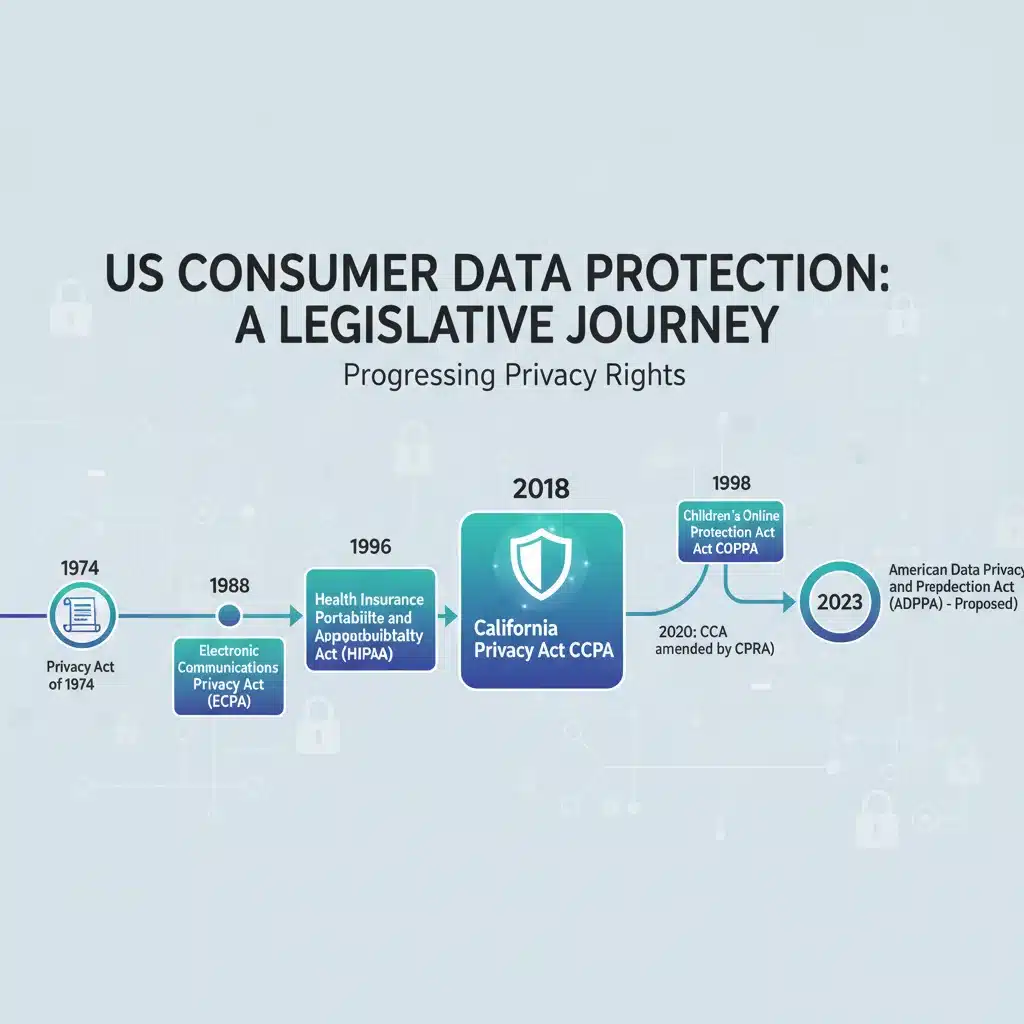
The United States has historically taken a sector-specific approach to data privacy, contrasting with the more comprehensive frameworks seen in regions like the European Union with its General Data Protection Regulation (GDPR). However, this is changing. Early 2026 marks a pivotal moment, with several states enacting or strengthening their own privacy laws, and federal discussions gaining momentum. These legislative efforts collectively aim to provide a more robust and uniform standard for consumer data privacy across the nation.
The patchwork of state-level privacy laws has been a defining characteristic of the U.S. data protection environment. While this has led to some inconsistencies, it has also fostered innovation and a competitive drive among states to offer stronger protections. The California Consumer Privacy Act (CCPA), and its successor the California Privacy Rights Act (CPRA), set a high bar, influencing subsequent legislation in states like Virginia (Virginia Consumer Data Protection Act – VCDPA), Colorado (Colorado Privacy Act – CPA), Utah (Utah Consumer Privacy Act – UCPA), and Connecticut (Connecticut Data Privacy Act – CTDPA). Early 2026 sees further refinement and enforcement of these and other emerging state laws, directly impacting how companies collect, use, and share your personal information.
The focus of these new and updated regulations is multi-faceted. They typically grant consumers specific rights, such as the right to know what data is being collected about them, the right to access that data, the right to correct inaccuracies, the right to delete their data, and the right to opt-out of the sale or sharing of their personal information. Furthermore, these laws often impose strict requirements on businesses regarding data security, transparency, and accountability. Understanding these fundamental rights is the first step in actively managing your consumer data privacy.
Key Regulatory Updates and Their Impact
As we navigate early 2026, several key regulatory updates are shaping the landscape of consumer data privacy. It’s crucial for every U.S. consumer to be aware of these changes and understand how they translate into practical rights and responsibilities for both individuals and organizations.
Expanded Definitions of Personal Information
Many new and updated laws are broadening the definition of ‘personal information.’ This expansion often includes categories beyond traditional identifiers like names and addresses, now encompassing IP addresses, persistent online identifiers, geolocation data, biometric information, and even inferences drawn from data to create a profile about a consumer’s preferences or characteristics. This broader scope means more of your digital interactions are now protected under privacy regulations, enhancing your overall consumer data privacy.
Strengthened Opt-Out Rights and Universal Opt-Out Mechanisms
A significant trend in early 2026 is the strengthening of opt-out rights. Consumers are increasingly empowered to prevent businesses from selling or sharing their personal information for targeted advertising or other purposes. Some states are also exploring or implementing universal opt-out mechanisms, allowing consumers to set a single preference (e.g., through a browser setting or a centralized tool) that signals their privacy choices to all websites and online services they visit. This move towards universal opt-out is a game-changer for simplifying consumer data privacy management.
Increased Transparency Requirements for Businesses
Businesses are facing stricter requirements to be transparent about their data collection and processing practices. This includes providing clear and accessible privacy policies that explain what data is collected, why it’s collected, with whom it’s shared, and how consumers can exercise their privacy rights. Vague or overly complex privacy policies are becoming less acceptable. This enhanced transparency is designed to help consumers make more informed decisions about their consumer data privacy.
Data Minimization and Purpose Limitation Principles
While not always explicitly codified as a right, the principles of data minimization and purpose limitation are gaining traction. Data minimization suggests that businesses should only collect the personal data that is strictly necessary for a stated purpose. Purpose limitation dictates that data collected for one specific purpose should not be used for an entirely different, unrelated purpose without explicit consumer consent. These principles are fundamental to responsible data handling and contribute significantly to overall consumer data privacy.
Enhanced Enforcement and Penalties
With new regulations come stronger enforcement mechanisms and potentially higher penalties for non-compliance. State attorneys general and dedicated privacy enforcement agencies are increasingly active in investigating and prosecuting violations. The prospect of substantial fines and reputational damage serves as a powerful incentive for businesses to prioritize consumer data privacy and adhere to regulatory requirements.

Practical Steps for U.S. Consumers to Protect Their Data
Understanding the legal framework is essential, but equally important are the practical steps you can take to actively protect your consumer data privacy. Here’s how to empower yourself in early 2026:
1. Review and Understand Privacy Policies
While often lengthy, make an effort to review the privacy policies of the services and websites you use frequently. Pay attention to what data they collect, how they use it, and whether they share it with third parties. Look for sections on your rights as a consumer and how to exercise them. If a policy is unclear or raises concerns, consider finding an alternative service.
2. Exercise Your Data Rights
Don’t hesitate to exercise your rights under applicable state laws. If you reside in a state with strong privacy legislation (like California, Virginia, Colorado, Utah, or Connecticut), you likely have the right to:
- Know: Request information about the specific pieces of personal data a business has collected about you.
- Access: Obtain a copy of the personal data collected about you.
- Correct: Ask businesses to correct inaccurate personal information.
- Delete: Request the deletion of your personal data held by a business.
- Opt-Out: Direct businesses not to sell or share your personal information.
Most companies provide a dedicated section on their website or a specific contact method (e.g., a toll-free number or email address) for submitting privacy requests. Take advantage of these mechanisms to manage your consumer data privacy.
3. Use Strong, Unique Passwords and Two-Factor Authentication (2FA)
This is foundational to digital security. Use a strong, unique password for every online account, ideally generated and stored by a reputable password manager. Enable two-factor authentication (2FA) or multi-factor authentication (MFA) wherever possible. This adds an extra layer of security, making it significantly harder for unauthorized individuals to access your accounts even if they somehow obtain your password.
4. Be Mindful of Information You Share Online
Think before you post. Every piece of information you share on social media, forums, or other public platforms can be collected and used. Adjust your privacy settings on social media to limit who can see your posts and personal information. Be cautious about sharing sensitive details like your full birthdate, home address, or phone number publicly.
5. Manage Your Cookie Preferences
Most websites use cookies to track your browsing activity. Take the time to manage your cookie preferences when prompted. Opt-out of non-essential cookies, especially those used for targeted advertising. Consider using browser extensions that block third-party trackers to further enhance your consumer data privacy.
6. Regularly Review App Permissions
On your smartphone and other devices, regularly review the permissions you’ve granted to apps. Many apps request access to your location, contacts, microphone, or camera. Only grant permissions that are absolutely necessary for the app’s functionality. Revoke permissions that seem excessive or unnecessary.
7. Be Wary of Phishing and Scams
Phishing attempts are becoming increasingly sophisticated. Be skeptical of unsolicited emails, texts, or calls asking for personal information or urging you to click on suspicious links. Always verify the sender’s identity and the legitimacy of the request before taking any action. These scams are often designed to compromise your consumer data privacy.
8. Use a Virtual Private Network (VPN)
When connecting to public Wi-Fi networks, a Virtual Private Network (VPN) can encrypt your internet traffic, making it much more difficult for others to intercept your data. A VPN can also mask your IP address, adding another layer of privacy to your online activities.
9. Consider Privacy-Focused Browsers and Search Engines
Explore using web browsers (like Brave or Firefox with enhanced tracking protection) and search engines (like DuckDuckGo) that prioritize user privacy by default, minimizing data collection and tracking.
The Role of Federal Legislation in Shaping Consumer Data Privacy
While state laws have been the primary drivers of consumer data privacy in the U.S., the conversation around a comprehensive federal privacy law continues to evolve. Early 2026 could see renewed legislative efforts in Congress to establish a national standard. Such a law would ideally harmonize the disparate state regulations, providing clarity for businesses and consistent protection for consumers across state lines.
A federal privacy law could address several critical areas: establishing a national baseline for consumer rights, setting clear rules for data collection and usage, creating a unified enforcement body, and potentially preempting some state laws to create a more consistent regulatory environment. The challenge lies in finding common ground among various stakeholders, including industry groups, consumer advocates, and different political factions, each with their own perspectives on the scope and strength of privacy protections. Nevertheless, the ongoing discussions signify a growing recognition at the federal level of the importance of robust consumer data privacy.
The potential for a federal law to override or harmonize existing state laws is a complex issue. While some argue that preemption would simplify compliance for businesses operating nationwide, others contend that it could dilute stronger protections already established in certain states. The debate reflects the intricate balance between fostering innovation, protecting individual rights, and ensuring a competitive marketplace. Regardless of the exact outcome, the direction of travel points towards increased accountability for data handlers and greater empowerment for individuals concerning their consumer data privacy.
Future Outlook for Consumer Data Privacy
Looking beyond early 2026, the trajectory for consumer data privacy suggests continued evolution. Emerging technologies such as artificial intelligence (AI), machine learning, and advanced biometrics will introduce new challenges and opportunities for data protection. Regulators will need to adapt quickly to ensure that privacy safeguards keep pace with technological advancements.
The concept of ‘privacy by design,’ where privacy considerations are integrated into the very architecture of systems and products from the outset, is expected to become more prevalent. Similarly, greater emphasis will likely be placed on privacy-enhancing technologies (PETs) that allow for data analysis and utility while preserving individual privacy. Consumers, in turn, will become more sophisticated in managing their digital identities, demanding greater control and transparency from the companies they interact with.
Education will also play a crucial role. Empowering consumers with knowledge about their data rights and the tools available to protect their privacy will be key to fostering a more secure digital ecosystem. As the understanding of consumer data privacy deepens among the general public, the demand for ethical data practices will continue to grow, pushing businesses and policymakers towards even stronger protections.
Conclusion: Your Role in Upholding Consumer Data Privacy
The early 2026 updates to consumer data privacy regulations in the U.S. represent a significant step forward in giving individuals more control over their personal information. These changes underscore a growing societal recognition that data privacy is not merely a technical issue but a fundamental human right in the digital age. While legislative efforts provide a crucial framework, your active participation is paramount.
By staying informed, exercising your rights, and adopting robust digital hygiene practices, you become an active participant in securing your digital footprint. Regularly review your privacy settings, be judicious about what you share online, and familiarize yourself with the mechanisms available to you for data access, correction, and deletion. The responsibility for consumer data privacy is shared: while businesses and governments have a duty to protect, individuals have the power to demand and enact those protections.
As technology continues to advance at an unprecedented pace, the need for vigilance and proactive measures will only intensify. The updates in early 2026 are not the end of the journey, but rather a vital milestone in the ongoing quest to balance innovation with individual privacy. Embrace these changes, empower yourself with knowledge, and take control of your digital identity to navigate the future with confidence and security.