Data Privacy Laws 2026: Navigating the Future of Information Protection
In an increasingly interconnected world, the digital footprint we leave behind grows larger by the day. From online shopping habits to personal health records, a vast amount of sensitive information is constantly being collected, processed, and stored. This digital expansion, while offering unparalleled convenience and innovation, also presents significant challenges regarding the protection of personal data. As we look towards 2026, understanding the landscape of Data Privacy Laws 2026 becomes not just a matter of compliance for businesses, but a fundamental right and responsibility for individuals.
The regulatory environment surrounding data privacy is dynamic, constantly evolving to address new technologies, emerging threats, and changing societal expectations. What was considered adequate protection a few years ago might be woefully insufficient today. Therefore, staying abreast of the latest developments and anticipating future trends in Data Privacy Laws 2026 is crucial for both organizations and individuals alike. This comprehensive guide aims to shed light on the current state of data privacy, project future trends, and offer practical solutions for safeguarding personal information in the digital age.
The stakes are incredibly high. Data breaches can lead to substantial financial penalties for companies, reputational damage, and a significant loss of consumer trust. For individuals, compromised data can result in identity theft, financial fraud, and exploitation. Thus, a proactive approach to data privacy, rooted in a deep understanding of current and anticipated regulations, is paramount.
The Evolution of Data Privacy: A Look Back and Forward
To truly grasp the significance of Data Privacy Laws 2026, it’s helpful to briefly review how we arrived at this point. The concept of privacy, while ancient, gained new dimensions with the advent of the internet and digital technologies. Early regulations were often fragmented and industry-specific. However, the early 21st century witnessed a growing global awareness of the need for more robust and comprehensive data protection frameworks.
Key Milestones in Data Privacy Legislation
- GDPR (General Data Protection Regulation): Enacted by the European Union in 2018, the GDPR set a global benchmark for data protection. Its extraterritorial reach meant that any organization processing the data of EU citizens, regardless of its physical location, had to comply. The GDPR introduced stringent requirements for consent, data breach notifications, the right to be forgotten, and significant fines for non-compliance.
- CCPA (California Consumer Privacy Act): Following the GDPR’s lead, California introduced the CCPA in 2020, granting consumers significant rights over their personal information, including the right to know what data is collected, the right to delete it, and the right to opt-out of its sale. The CCPA has since been expanded by the CPRA (California Privacy Rights Act), further strengthening consumer privacy rights.
- Other Regional and National Laws: Numerous other countries and regions have followed suit, enacting their own data privacy laws. These include Brazil’s LGPD, Canada’s PIPEDA, South Africa’s POPIA, and many others across Asia, Africa, and Latin America. This patchwork of regulations creates a complex compliance environment for global businesses.
These foundational laws have shaped the current understanding of data privacy and will undoubtedly influence the trajectory of Data Privacy Laws 2026. The trend is clear: greater transparency, increased individual control over personal data, and more significant accountability for organizations.
Anticipating Data Privacy Laws 2026: Emerging Trends and Challenges
As we project forward to 2026, several key trends are expected to shape the future of data privacy legislation and enforcement. These trends are driven by technological advancements, evolving societal expectations, and the increasing sophistication of cyber threats.
Global Harmonization vs. Fragmentation
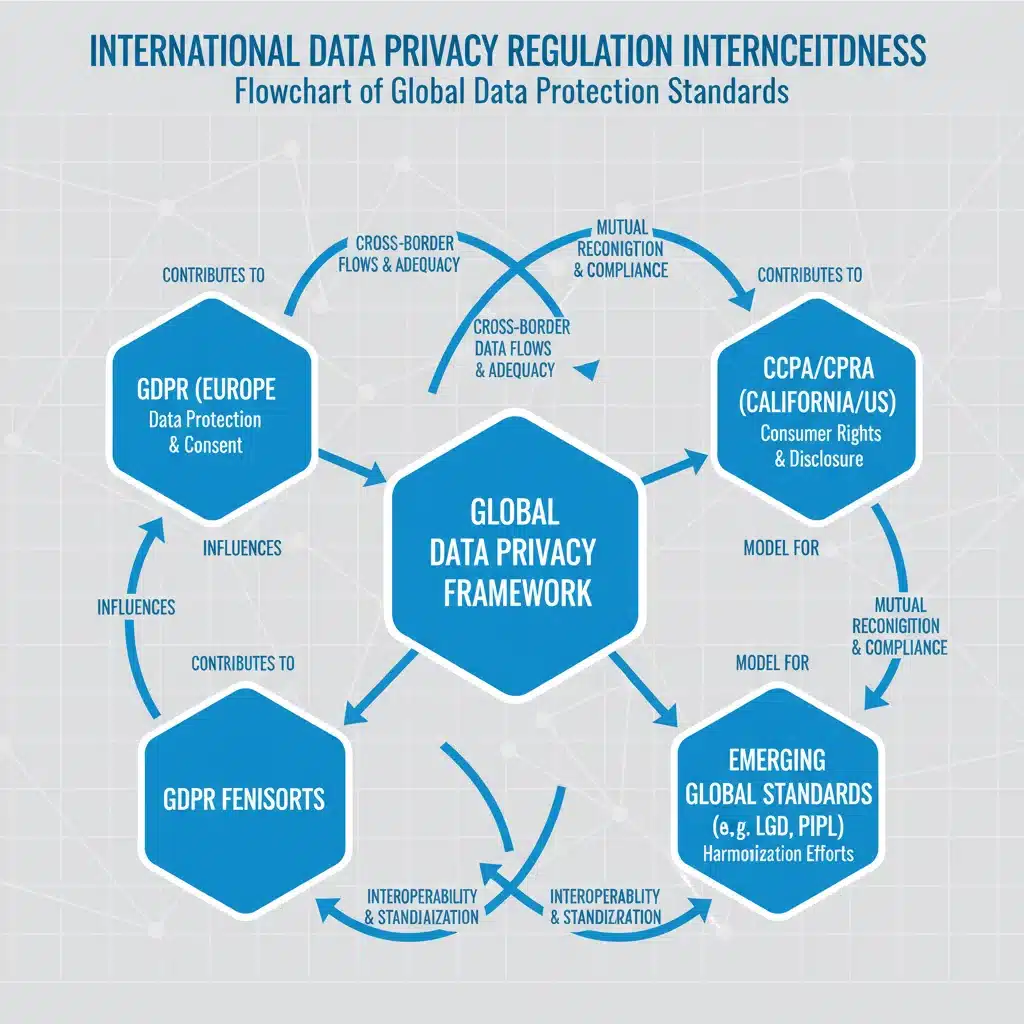
One of the biggest challenges for businesses operating internationally is navigating the disparate data privacy laws across different jurisdictions. While there’s a strong desire for global harmonization, the reality is often more fragmented. In 2026, we might see continued efforts towards interoperability between major frameworks, but complete uniformity is unlikely. Instead, organizations will need robust systems to adapt to varying compliance requirements.
Focus on Emerging Technologies
New technologies constantly push the boundaries of data privacy. Artificial intelligence (AI), machine learning (ML), the Internet of Things (IoT), and blockchain all present unique data privacy considerations. Data Privacy Laws 2026 will likely place a greater emphasis on regulating how these technologies collect, process, and use personal data. This could involve specific regulations around algorithmic transparency, bias in AI systems, and the secure handling of data generated by IoT devices.
Enhanced Individual Rights and Consent Mechanisms
Expect to see further strengthening of individual rights. This could include more granular control over data sharing, easier mechanisms for exercising data subject rights (e.g., access, rectification, erasure), and more explicit consent requirements, particularly for sensitive data categories or cross-border data transfers. The concept of ‘privacy by design’ and ‘privacy by default’ will become even more entrenched in legal frameworks.
Increased Enforcement and Stricter Penalties
Regulatory bodies worldwide are becoming more sophisticated in their enforcement efforts. The fines associated with data privacy violations are substantial and are likely to continue to increase. Beyond financial penalties, regulatory actions can also include mandates for operational changes, and public shaming, which can severely impact a company’s brand and reputation. Businesses must understand that compliance with Data Privacy Laws 2026 is not just a legal formality but a critical business imperative.
Data Localization and Cross-Border Data Flows
The debate around data localization – the requirement that certain data be stored and processed within a country’s borders – is intensifying. While some countries advocate for it for national security or economic reasons, it can create significant operational complexities for global companies. In 2026, expect continued tension and evolving regulations regarding cross-border data transfers, potentially leading to new standard contractual clauses or certification mechanisms.
Practical Solutions for Businesses: Navigating Data Privacy Laws 2026
For businesses, preparing for Data Privacy Laws 2026 requires a comprehensive and proactive strategy. It’s not enough to react to regulations; organizations must embed privacy into their core operations.
1. Conduct Regular Data Audits and Mapping
The first step towards compliance is understanding what data you collect, where it comes from, where it’s stored, who has access to it, and why you process it. Regular data audits and data mapping exercises are essential. This allows organizations to identify personal data, assess its sensitivity, and ensure it aligns with legitimate business purposes and legal bases for processing.
2. Implement Robust Data Governance Frameworks
A strong data governance framework provides the policies, procedures, and organizational structures necessary to manage data effectively and compliantly. This includes defining roles and responsibilities, establishing data retention policies, and ensuring data quality and accuracy. As Data Privacy Laws 2026 become more intricate, a well-defined governance framework will be invaluable.
3. Strengthen Consent Management
Consent remains a cornerstone of data privacy. Businesses must ensure their consent mechanisms are clear, unambiguous, granular, and easily revocable. This often involves implementing sophisticated Consent Management Platforms (CMPs) that track and manage user preferences across various data processing activities. Regular review of consent practices against evolving regulations is critical.
4. Prioritize Security Measures and Incident Response
Data privacy and data security are inextricably linked. Robust cybersecurity measures are fundamental to protecting personal data from unauthorized access, breaches, and loss. This includes encryption, access controls, regular security audits, and employee training. Furthermore, having a well-defined and regularly tested data breach incident response plan is not just good practice but a legal requirement under many Data Privacy Laws 2026.
5. Embrace Privacy by Design and Default
Integrate privacy considerations into the design and development of all new products, services, and systems from the outset. This ‘privacy by design’ approach ensures that data protection is not an afterthought but a core component. Similarly, ‘privacy by default’ means that the strictest privacy settings are automatically applied without user intervention, offering maximum protection from day one.
6. Invest in Employee Training and Awareness
Human error remains a leading cause of data breaches. Regular and comprehensive training for all employees on data privacy policies, best practices, and the importance of protecting personal information is vital. This fosters a culture of privacy within the organization and helps mitigate risks associated with internal vulnerabilities.
7. Understand Cross-Border Data Transfer Requirements
For global businesses, navigating the complexities of cross-border data transfers will be a significant aspect of complying with Data Privacy Laws 2026. This involves understanding mechanisms like Standard Contractual Clauses (SCCs), Binding Corporate Rules (BCRs), and other legal instruments that facilitate lawful data transfers while ensuring adequate protection.
8. Appoint a Data Protection Officer (DPO)
Many current and anticipated laws, including the GDPR, mandate the appointment of a Data Protection Officer (DPO) for certain organizations. Even if not legally required, having a dedicated DPO or a privacy team can be invaluable for overseeing compliance efforts, advising on privacy matters, and serving as a point of contact for regulatory authorities and data subjects.
9. Stay Informed and Adaptable
The regulatory landscape is constantly shifting. Businesses must commit to continuous monitoring of legislative developments, engaging with industry experts, and adapting their privacy programs accordingly. Proactive engagement with legal counsel specializing in data privacy is also highly recommended to ensure ongoing compliance with Data Privacy Laws 2026 and beyond.
Practical Solutions for Individuals: Protecting Your Personal Information Online
While businesses bear the primary responsibility for compliance, individuals also play a critical role in safeguarding their personal data. Understanding your rights and taking proactive steps can significantly enhance your digital privacy and security in the era of Data Privacy Laws 2026.
1. Understand Your Privacy Rights
Familiarize yourself with the core tenets of data privacy laws applicable to you, such as the right to access your data, the right to rectification, the right to erasure (the ‘right to be forgotten’), and the right to object to processing. Knowing your rights empowers you to make informed decisions and assert control over your personal information.
2. Be Mindful of What You Share Online
Every piece of information you share online, whether on social media, forums, or websites, can be collected and used. Be judicious about the personal details you disclose. Think before you post, and consider the potential implications of sharing sensitive information.
3. Use Strong, Unique Passwords and Multi-Factor Authentication (MFA)
This is a fundamental security practice. Use complex, unique passwords for each of your online accounts. Even better, enable multi-factor authentication (MFA) wherever possible. MFA adds an extra layer of security, making it significantly harder for unauthorized individuals to access your accounts, even if they somehow obtain your password.
4. Review Privacy Settings Regularly
Many online services and social media platforms offer extensive privacy settings. Take the time to review and adjust these settings to your comfort level. Limit who can see your posts, information, and activities. Remember that default settings are often not the most privacy-protective.
5. Exercise Your Opt-Out Rights
Many data privacy laws, including CCPA/CPRA, give you the right to opt-out of the sale or sharing of your personal information. Look for ‘Do Not Sell My Personal Information’ links on websites and exercise these rights. Similarly, unsubscribe from unwanted marketing emails and revoke consent for data processing you no longer agree to.
6. Be Wary of Phishing and Scams
Cybercriminals constantly try to trick individuals into revealing personal information through phishing emails, fake websites, and fraudulent calls. Be skeptical of unsolicited communications, verify the sender, and never click on suspicious links or download attachments from unknown sources. Education on common scam tactics is essential for personal data protection.
7. Use Privacy-Enhancing Tools
Consider using tools that enhance your online privacy. This could include privacy-focused browsers, browser extensions that block trackers, virtual private networks (VPNs) for secure internet connections, and encrypted messaging apps. These tools can help minimize your digital footprint and protect your data from surveillance.
8. Stay Informed About Data Breaches
Keep an eye on news about data breaches. If a company you use experiences a breach, assume your data may be compromised and take immediate action, such as changing your password for that service and any other accounts where you used the same password. Monitoring your credit report can also help detect fraudulent activity early.

The Future Landscape: What to Expect Beyond 2026
The journey of data privacy does not end in 2026. The rapid pace of technological innovation ensures that the regulatory landscape will continue to evolve. We can anticipate further developments in several key areas:
- Increased Focus on Data Ethics: Beyond mere legal compliance, there will be a growing emphasis on ethical data practices, particularly concerning AI and algorithmic decision-making. Companies will be expected to demonstrate not just legality, but also fairness, transparency, and accountability in their data use.
- Quantum Computing and Encryption: The advent of quantum computing poses a potential threat to current encryption standards. Research and development into post-quantum cryptography will become critical, and future Data Privacy Laws 2026 may begin to incorporate requirements for quantum-safe encryption.
- Decentralized Identity and Self-Sovereign Identity (SSI): As individuals seek greater control over their digital identities, decentralized and self-sovereign identity solutions, often leveraging blockchain technology, could gain traction. These technologies could fundamentally alter how personal data is managed and shared, placing more power in the hands of the individual.
- Environmental, Social, and Governance (ESG) Reporting: Data privacy and security are increasingly becoming integral components of a company’s overall ESG performance. Investors and consumers are paying more attention to how companies handle data, and this will likely lead to more stringent reporting requirements.
- Privacy-Enhancing Technologies (PETs): Expect further innovation and adoption of PETs, such as homomorphic encryption, differential privacy, and secure multi-party computation. These technologies allow for data analysis and collaboration while preserving the privacy of individual data points, offering promising solutions for balancing utility and privacy.
These future considerations underscore the long-term commitment required for effective data privacy. Both businesses and individuals must remain vigilant, adaptable, and informed to navigate the complexities of data protection in the coming decades.
Conclusion: A Shared Responsibility for Data Privacy
The landscape of Data Privacy Laws 2026 is complex, ever-changing, and profoundly impactful. For businesses, it represents a critical area of legal and ethical compliance, demanding significant investment in robust data governance, security, and transparency. For individuals, it’s an opportunity to assert greater control over their digital lives and protect their fundamental right to privacy.
The journey towards comprehensive data privacy is a shared responsibility. Organizations must prioritize ethical data handling, implement stringent security measures, and build trust with their customers. Individuals must educate themselves, be proactive in managing their digital footprint, and exercise their privacy rights. By working together, we can foster a digital environment where innovation thrives alongside robust protection of personal information. The future of data privacy in 2026 and beyond hinges on this collective commitment.