AI Creativity 2026: How U.S. Artists and Writers Adapt to New Tools
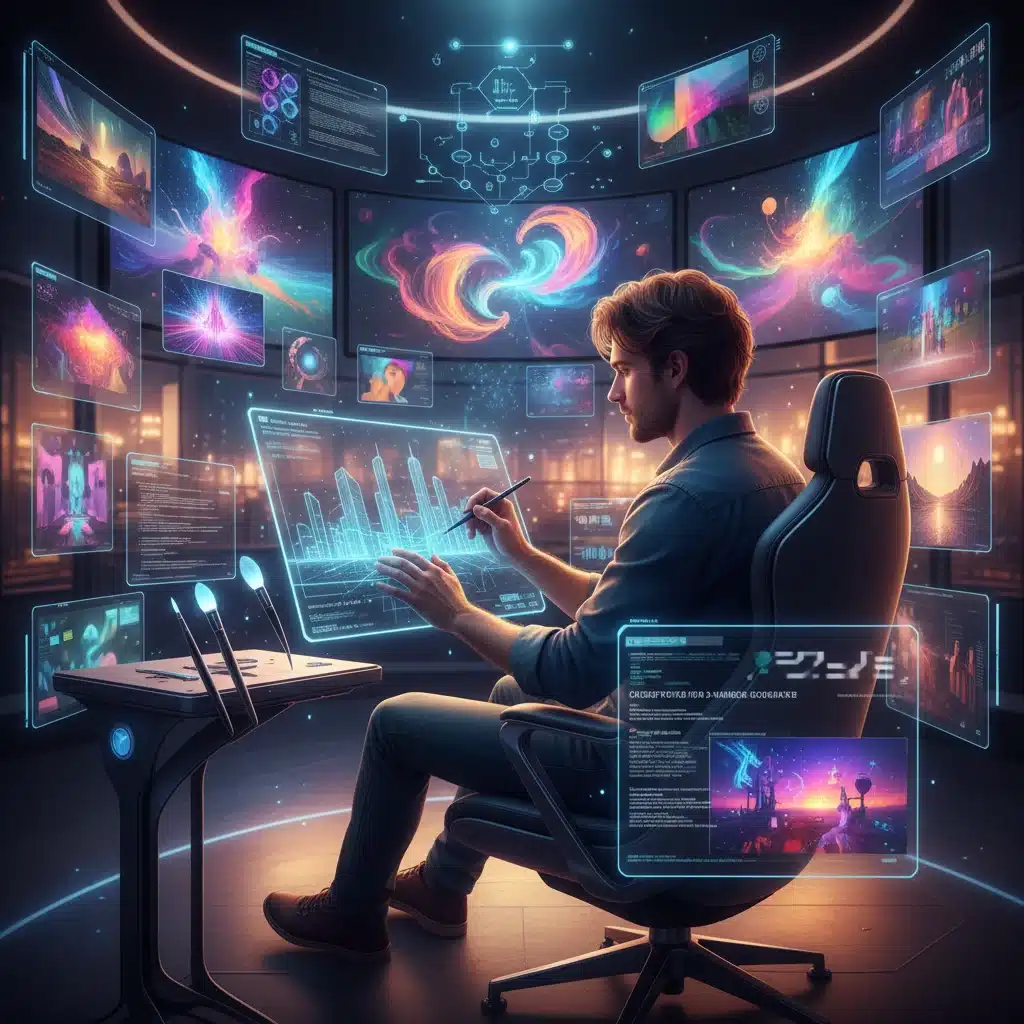
The year is 2026, and the creative landscape in the United States is in constant flux. Artificial intelligence, once a distant concept relegated to science fiction, has firmly entrenched itself as a potent force, fundamentally reshaping how artists and writers conceive, produce, and disseminate their work. The question is no longer if AI will impact creativity, but how human creators are adapting to its pervasive influence. This article delves into the intricate ways U.S. artists and writers are navigating this new technological frontier, exploring the challenges, celebrating the innovations, and peering into the future of human-AI collaboration, focusing on the critical aspect of AI creativity adaptation.
The Shifting Sands of Creativity: AI’s Inevitable Ascent
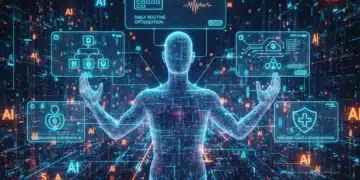
For centuries, creativity has been considered the exclusive domain of human intellect and emotion. The ability to imagine, innovate, and express unique perspectives was a hallmark of human exceptionalism. However, the rapid advancements in AI, particularly in generative models, have begun to blur these lines. From generating photorealistic images and composing original music to drafting compelling narratives and even coding complex software, AI’s capabilities are expanding at an exponential rate. This technological leap has sparked both excitement and apprehension within the creative communities across the U.S.
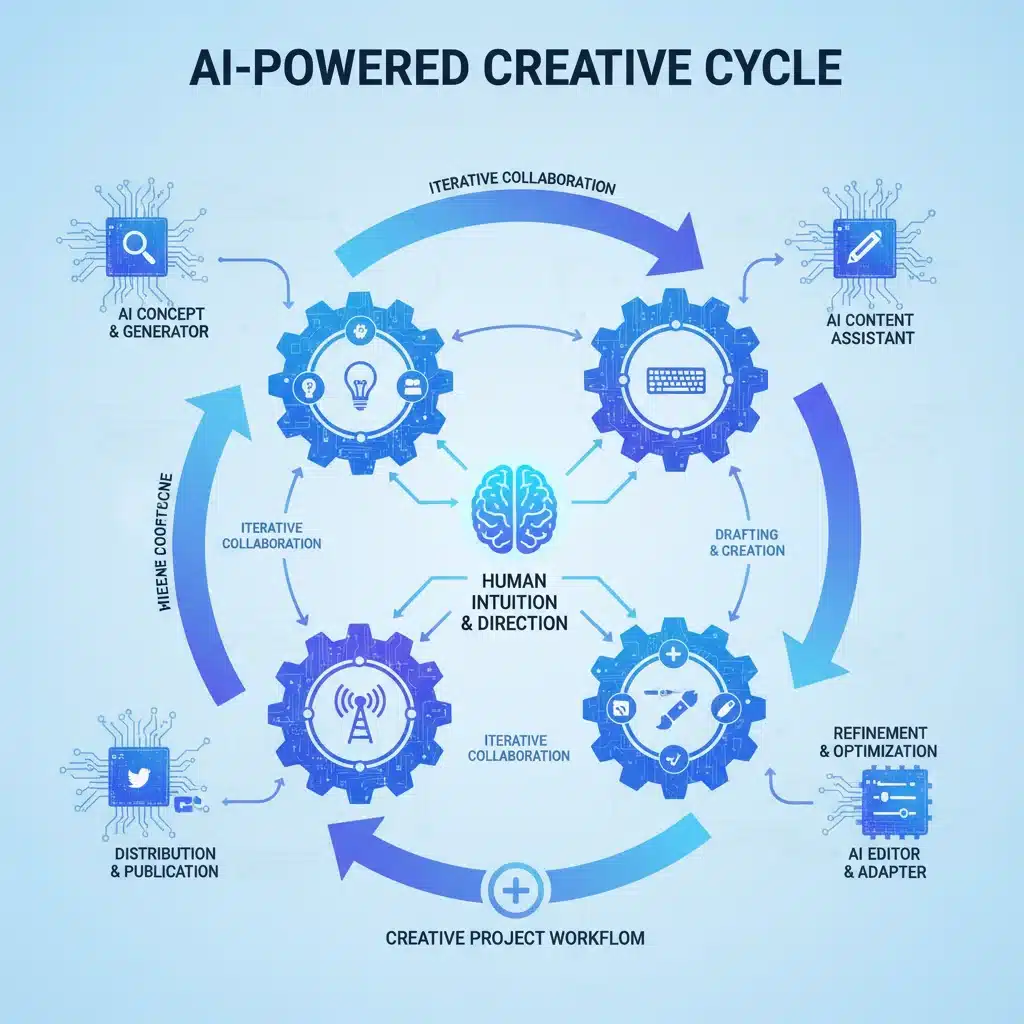
By 2026, the initial shockwaves of AI integration have settled into a more nuanced understanding. Many artists and writers have moved beyond outright rejection or uncritical embrace, instead focusing on strategic AI creativity adaptation. They are exploring how these tools can augment their abilities, streamline workflows, and unlock new forms of expression that were previously unimaginable. The conversation has shifted from ‘AI vs. human’ to ‘AI with human,’ emphasizing collaboration and synergy.
AI as a Creative Partner: Redefining the Artist’s Toolkit
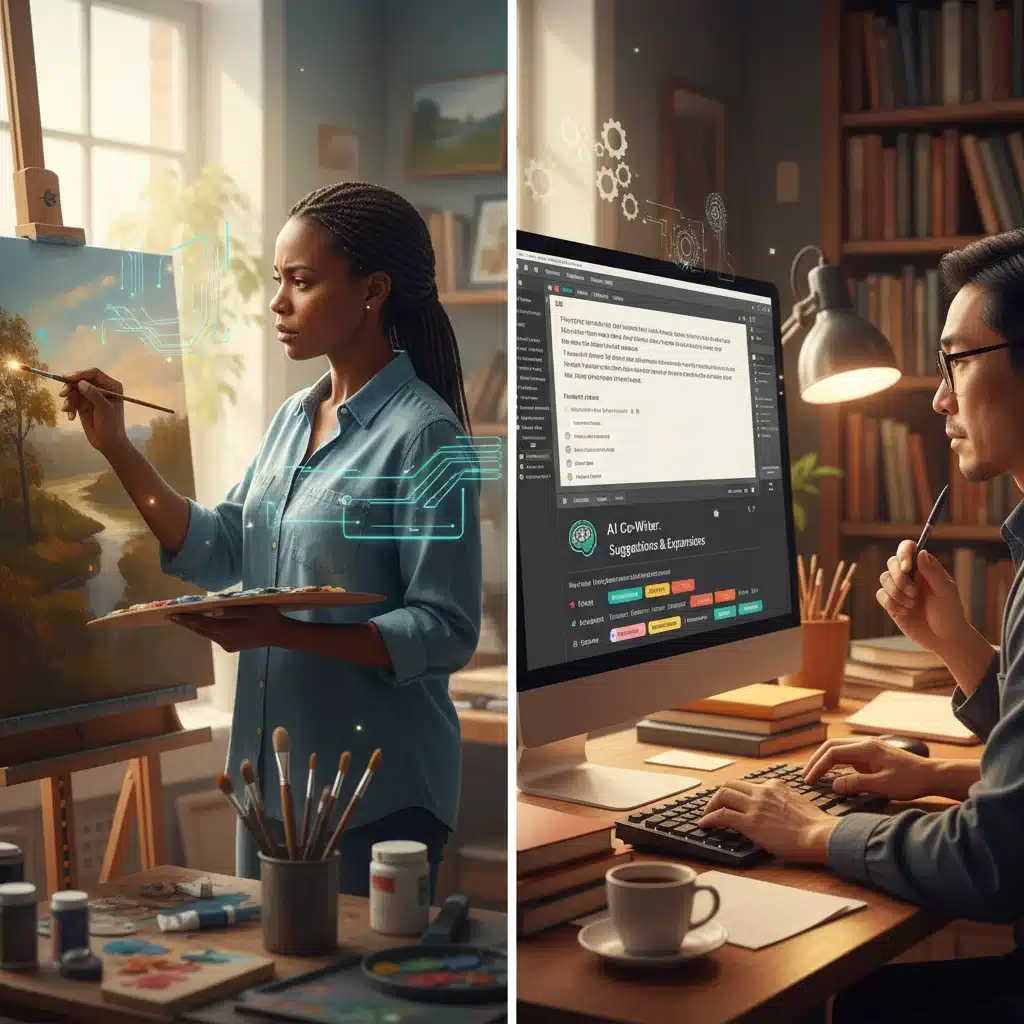
One of the most significant shifts observed among U.S. creatives is the adoption of AI as a collaborative partner. For visual artists, AI image generators have become powerful ideation tools. Instead of starting from a blank canvas, artists can feed prompts to AI to generate countless variations of concepts, styles, and compositions. This allows for rapid prototyping and exploration of visual themes, significantly cutting down the initial brainstorming phase. A painter might use AI to generate reference images for complex poses or lighting scenarios, then interpret and refine these AI-generated elements with their unique artistic vision and traditional techniques. This process exemplifies AI creativity adaptation by leveraging AI for initial inspiration while retaining human mastery for execution and refinement.
Writers, too, are experiencing a paradigm shift. AI-powered writing assistants can help overcome writer’s block by suggesting plot twists, character dialogues, or alternative phrasing. For non-fiction writers and journalists, AI can rapidly synthesize vast amounts of information, extract key insights, and even draft initial reports or summaries, leaving the human writer to focus on critical analysis, narrative structuring, and injecting the essential human element of empathy and nuanced understanding. This doesn’t diminish the writer’s role but elevates it, allowing them to concentrate on higher-order cognitive tasks that AI currently struggles with.
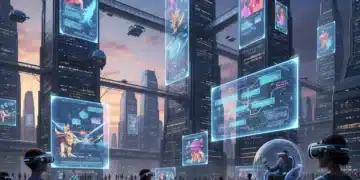
The adaptation extends to musicians, filmmakers, and game developers. AI can assist in composing background scores, generating procedural assets for virtual environments, or even creating dynamic non-player character (NPC) dialogues. The creative process becomes a dialogue between human intent and algorithmic output, where the human remains the director, guiding the AI to fulfill their artistic vision. This symbiotic relationship is at the heart of successful AI creativity adaptation.
The Ethical Maze: Navigating Copyright, Authenticity, and Bias
While the opportunities presented by AI are vast, the ethical implications continue to be a significant concern for U.S. artists and writers. By 2026, debates surrounding copyright ownership of AI-generated content remain fervent. If an AI is trained on copyrighted material, who owns the output? Is it the original creators whose work formed the training data, the AI developer, or the human who prompted the AI? These questions are actively being addressed in legal frameworks and industry standards, but clear, universally accepted answers are still emerging.
Authenticity is another critical point of contention. When a piece of art or writing is heavily influenced or generated by AI, does it retain the same inherent value as something conceived and executed purely by human hands? Many argue that the ‘soul’ or ‘human touch’ is lost, while others contend that the tool used is irrelevant; only the final artistic impact matters. This philosophical debate forces creators to define their relationship with AI and articulate the unique value they bring to the creative process, even when augmented by machines. This self-reflection is an integral part of AI creativity adaptation.
Bias is also a pressing issue. AI models are trained on existing datasets, which often reflect societal biases. If an AI is used to generate character descriptions, it might perpetuate stereotypes. If it’s used to create art, it might inadvertently favor certain aesthetics or demographics. U.S. artists and writers are increasingly aware of these biases and are developing strategies to mitigate them, such as curating training data, critically evaluating AI outputs, and actively intervening to correct discriminatory patterns. Responsible AI creativity adaptation requires a deep understanding of these inherent technological limitations and ethical responsibilities.
Education and Skill Reinvention: The New Creative Curriculum
To effectively navigate this AI-infused creative landscape, U.S. artists and writers are recognizing the need for continuous learning and skill reinvention. Educational institutions are rapidly adapting their curricula to include AI literacy, prompt engineering, and ethical AI usage for creative fields. Workshops and online courses dedicated to mastering AI tools are proliferating, demonstrating a proactive approach to AI creativity adaptation.
The new skillset for a 2026 creative often includes:
- Prompt Engineering: The art and science of crafting effective prompts to guide AI models towards desired outputs.
- AI Tool Proficiency: Familiarity with various AI platforms for image generation, text generation, music composition, and 3D modeling.
- Critical Evaluation: The ability to discern high-quality, original, and unbiased AI outputs from generic or problematic ones.
- Ethical AI Understanding: Knowledge of copyright, intellectual property, data privacy, and bias in AI.
- Human-Centric Storytelling: Reinforcing the unique human ability to imbue narratives with genuine emotion, complex themes, and personal experiences that resonate deeply.
- Interdisciplinary Collaboration: Working with AI developers, ethicists, and other creatives to push the boundaries of what’s possible.
This emphasis on new skills highlights a fundamental shift: creativity is no longer solely about innate talent but also about the ability to effectively leverage advanced technological tools. The most successful creatives in 2026 are often those who can seamlessly integrate AI into their workflow, using it to amplify their unique human strengths rather than replace them. This proactive approach to skill development is crucial for effective AI creativity adaptation.
Case Studies in AI Creativity Adaptation: Success Stories and Emerging Trends
Visual Arts: The AI-Assisted Illustrator
Take Sarah, a freelance illustrator based in Brooklyn. Initially skeptical, Sarah began experimenting with AI image generators to create mood boards and explore character designs. She found that AI could rapidly produce variations of a character’s outfit, expression, or posture, saving her hours of initial sketching. She then takes these AI-generated concepts, refines them with her distinctive hand-drawn style, adds intricate details, and imbues them with the emotional depth that only a human can achieve. Her clients appreciate the accelerated concept phase and the unique blend of digital efficiency and handcrafted artistry.
Literature: The Novelist and the AI Co-Author
Mark, a science fiction novelist in Seattle, uses AI writing assistants to help with world-building and dialogue generation. For his latest novel, the AI helped him brainstorm alien species’ characteristics and even drafted initial conversations between secondary characters. Mark then meticulously edited, rewrote, and infused these AI-generated elements with his unique narrative voice, philosophical undertones, and complex character arcs. He views the AI as a powerful brainstorming partner, allowing him to focus on the overarching plot and thematic development, which are his true strengths. This collaborative writing process is a prime example of effective AI creativity adaptation in literature.
Music: The AI-Enhanced Composer
Maria, a film composer in Los Angeles, utilizes AI music generation tools to create ambient soundscapes and initial melodic motifs. She can input parameters like mood, tempo, and instrumentation, and the AI provides various musical ideas. Maria then takes these raw AI outputs, orchestrates them, adds complex harmonies, and records live instrumental performances to give the pieces a unique, human feel. This hybrid approach allows her to deliver high-quality scores faster while retaining her signature artistic sound, showcasing innovative AI creativity adaptation in music production.
The Future of Creativity: A Symbiotic Relationship
Looking ahead, the relationship between humans and AI in creative fields is likely to deepen and become even more intertwined. By 2026, it’s clear that AI is not merely a tool but an integral part of the creative ecosystem. The fear of AI replacing human creativity is gradually being supplanted by an understanding of AI as an amplifier, a collaborator, and a catalyst for new forms of artistic expression.
The future will likely see more sophisticated AI models that can understand nuanced artistic intent, learn from human feedback in real-time, and even develop their own emergent creative properties within defined parameters. This will push the boundaries of what’s possible, leading to art forms and narratives that are truly hybrid – born from the unique synthesis of human intuition and algorithmic power. The ongoing process of AI creativity adaptation will be less about overcoming AI and more about co-evolving with it.
Moreover, AI could democratize creativity further. Tools that were once exclusive to professionals might become accessible to anyone with an idea, lowering the barrier to entry for aspiring artists and writers. This could lead to an explosion of diverse creative content, albeit with new challenges in curation and recognition. The role of the human artist might shift from sole creator to curator, director, and visionary, orchestrating AI tools to bring their grand ideas to life.
Challenges on the Horizon: Maintaining Human Essence and Value
Despite the optimistic outlook, challenges remain. One of the most significant is ensuring that the human essence of creativity is not diluted. As AI becomes more sophisticated, the temptation to rely too heavily on its capabilities might grow, potentially leading to generic or emotionally sterile outputs. Artists and writers will need to continually assert their unique human perspective, their lived experiences, and their emotional intelligence as the irreplaceable core of their work.
Another challenge is the economic impact. While AI can enhance productivity, it also raises questions about fair compensation for creatives, especially if AI-generated content becomes indistinguishable from human-made work. Policy makers, industry leaders, and creative communities will need to collaborate to establish frameworks that protect intellectual property, ensure fair wages, and support human artists in an AI-driven economy. This economic adaptation is a critical component of successful AI creativity adaptation on a societal scale.
Finally, the rapid pace of technological change itself poses a challenge. Keeping up with new AI models, ethical guidelines, and industry best practices will require continuous effort and adaptability from creatives. Lifelong learning will become not just an advantage but a necessity for anyone working in the arts and literature.
Conclusion: Embracing the Augmented Creative Era
By 2026, the narrative surrounding AI and creativity in the U.S. has matured significantly. What began with fear and skepticism has evolved into a complex, yet often productive, dialogue about collaboration and augmentation. U.S. artists and writers are not merely spectators in the AI revolution; they are active participants, shaping its trajectory and harnessing its power to expand their creative horizons.
The key to thriving in this new era lies in proactive and thoughtful AI creativity adaptation. It involves embracing AI as a powerful tool, understanding its limitations, navigating its ethical complexities, and continuously honing unique human skills that AI cannot replicate. The future of creativity is not about humans versus machines, but about a symbiotic relationship where human ingenuity and artificial intelligence converge to unlock unprecedented levels of artistic expression and innovation. The canvas of tomorrow is being painted, and both human and artificial hands are holding the brush.