Digital Decluttering 2026: Reclaim Your Focus & Clear Your Mind

Digital Decluttering for a Clearer Mind: A Step-by-Step 2026 Guide to Reclaiming Your Digital Space and Focus
In our hyper-connected world, the lines between our physical and digital lives have blurred. While technology offers unparalleled convenience and connectivity, it also brings an unprecedented amount of digital clutter. From overflowing inboxes and disorganized cloud storage to incessant notifications and a never-ending stream of social media, our digital environments can quickly become a source of stress, distraction, and mental fatigue. This overwhelming digital landscape often leaves us feeling scattered, unproductive, and constantly behind. But what if there was a way to regain control? What if you could transform your digital chaos into a calm, organized, and efficient space that supports your well-being and productivity?
Welcome to the era of intentional living, where digital decluttering is not just a trend but a necessity for mental clarity and sustained focus. This comprehensive 2026 guide will equip you with the strategies, tools, and mindset needed to embark on a successful digital decluttering guide journey. We’ll explore why digital clutter is so detrimental, how to identify its hidden corners, and most importantly, provide a step-by-step roadmap to reclaim your digital space and cultivate a clearer, more focused mind. Whether you’re a seasoned digital native or just starting to feel the weight of digital overload, this guide is designed to help you create a more intentional and harmonious relationship with technology. Prepare to transform your digital life, one byte at a time.
Understanding the Impact of Digital Clutter: Why a Digital Decluttering Guide is Essential
Before we dive into the ‘how,’ it’s crucial to understand the ‘why.’ Digital clutter isn’t just an aesthetic issue; it has profound impacts on our cognitive function, emotional well-being, and overall productivity. Recognizing these effects is the first step towards committing to a thorough digital decluttering guide process.
Cognitive Overload and Decision Fatigue
Every unread email, every notification, every disorganized file on your desktop demands a tiny sliver of your attention. While individually small, these demands accumulate, leading to cognitive overload. Your brain constantly processes these digital stimuli, even if you’re not actively engaging with them. This perpetual background processing can exhaust your mental resources, making it harder to focus on complex tasks, think creatively, and make sound decisions. The phenomenon of ‘decision fatigue’ sets in when you’re faced with an endless stream of choices, from which app to open next to which file to delete, leaving you feeling drained and less effective.
Increased Stress and Anxiety
A cluttered digital environment mirrors a cluttered mind. The constant barrage of information, the fear of missing out (FOMO) perpetuated by social media, and the nagging feeling of being perpetually connected can significantly elevate stress and anxiety levels. The pressure to respond instantly, to keep up with every digital trend, and to maintain a flawless online persona creates a cycle of stress that can be difficult to break. This digital stress often spills over into our physical lives, affecting sleep, relationships, and general happiness. A comprehensive digital decluttering guide aims to alleviate this burden.
Reduced Productivity and Wasted Time
How much time do you spend searching for a file you know you saved, sifting through hundreds of emails to find an important one, or getting sidetracked by notifications while trying to work? Digital clutter is a major time thief. Disorganized files, an overwhelming number of apps, and a chaotic digital workflow create friction that slows you down and diverts your attention. This not only reduces your immediate productivity but also erodes your ability to engage in deep work, a state of focused concentration essential for high-quality output. Implementing a structured digital decluttering guide can help recover this lost time and boost efficiency.
Diminished Creativity and Mindfulness
A mind constantly bombarded by digital input has little room for quiet reflection, creative thought, or mindfulness. The space for ideas to germinate, for introspection, and for simply ‘being’ is often occupied by the digital noise. By creating a more intentional and minimalist digital environment, you free up mental bandwidth, allowing for greater creativity, deeper concentration, and a more mindful approach to life. This is a core benefit of following a dedicated digital decluttering guide.
The 2026 Digital Decluttering Guide: Your Step-by-Step Roadmap
Now that we understand the ‘why,’ let’s delve into the ‘how.’ This step-by-step digital decluttering guide is designed to be actionable and comprehensive, covering all major aspects of your digital life. Remember, this isn’t a one-time fix but an ongoing practice. Start small, be consistent, and celebrate your progress.
Phase 1: The Digital Audit – Where to Begin Your Digital Decluttering Guide Journey
The first step in any effective decluttering process is to understand the scope of the problem. A digital audit involves taking an inventory of all your digital domains.
Step 1.1: Assess Your Digital Footprint
List every digital platform, device, and account you use regularly. This includes:
- Devices: Smartphones, tablets, laptops, desktops, smartwatches, e-readers.
- Accounts: Email (personal, work), social media (Facebook, Instagram, X, LinkedIn, TikTok, etc.), cloud storage (Google Drive, Dropbox, OneDrive), streaming services, online shopping accounts, news subscriptions, gaming platforms.
- Applications: All apps on your phone, software on your computer, browser extensions.
This initial assessment will give you a clear picture of the vastness of your digital world. Don’t be surprised if the list is longer than you expected!
Step 1.2: Identify Problem Areas and Time Sinks
For each item on your list, ask yourself:
- Where do I spend most of my digital time?
- What digital spaces cause me the most stress or anxiety?
- Which apps or platforms do I use out of habit rather than necessity or enjoyment?
- Where is my digital clutter most overwhelming (e.g., email inbox, photo library, desktop)?
Consider using screen time trackers available on most smartphones and operating systems to get an objective view of your usage patterns. This data will be invaluable as you progress through this digital decluttering guide.
Phase 2: Decluttering Your Devices – A Core Part of Your Digital Decluttering Guide
Your devices are the primary gateways to your digital life. Cleaning them up is paramount.
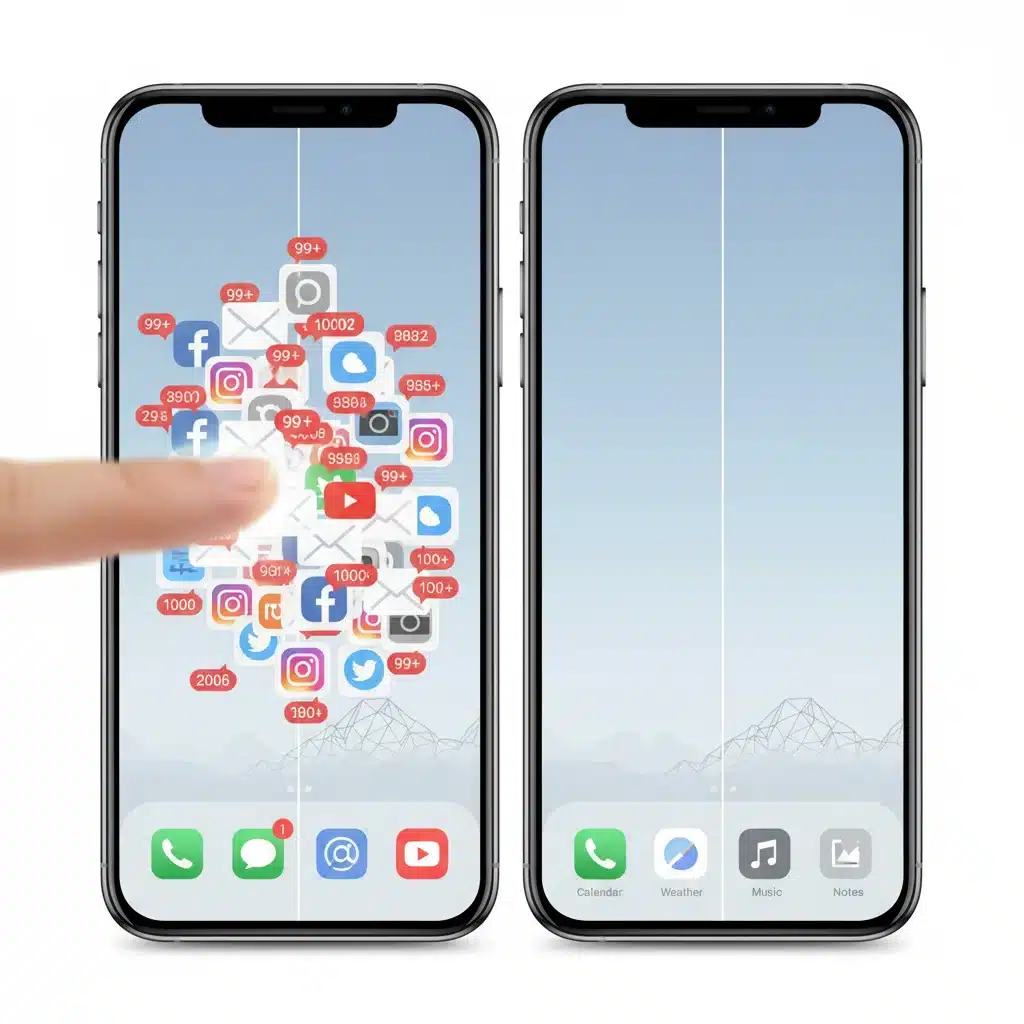
Step 2.1: Smartphone Detox
Your smartphone is often the biggest culprit for digital overload. Here’s how to tackle it:
- Delete Unused Apps: Be ruthless. If you haven’t used an app in the last month, delete it. If you might need it again, consider offloading it (iOS) or archiving it.
- Organize Remaining Apps: Group similar apps into folders. Aim for one screen of essential apps, or at most, two. Utilize the search function for less frequently used apps.
- Manage Notifications: This is critical. Turn off all non-essential notifications. For apps you need, customize notifications to be less intrusive (e.g., silent, no banners). Consider a ‘Do Not Disturb’ schedule.
- Clean Up Your Home Screen: Remove widgets that cause distraction. Opt for a minimalist background. The goal is to make your phone less enticing for mindless scrolling.
- Review Subscriptions: Unsubscribe from premium app features or services you no longer use.
Step 2.2: Computer Cleanup
Your computer is likely a repository of years of digital accumulation.
- Desktop Declutter: Aim for a clean desktop with minimal icons. Use a temporary folder for files you’re actively working on, then move them to their permanent home.
- File Organization: Create a logical folder structure for your documents, photos, and media. Use consistent naming conventions. Delete duplicates and old versions of files. Consider a ‘digital archive’ for things you need to keep but rarely access.
- Uninstall Unused Software: Just like apps, remove programs you no longer use. They take up space and can slow down your system.
- Browser Cleanup: Delete unnecessary browser extensions. Clear cached data and cookies regularly. Organize bookmarks into folders or use a bookmark manager. Close unused tabs – consider a ‘tab suspender’ extension if you’re a tab hoarder.
- Empty the Trash/Recycle Bin: This is often overlooked but essential for freeing up space.
Step 2.3: Cloud Storage Optimization
Cloud services are fantastic, but they can become just as cluttered as local storage.
- Review and Delete: Go through your Google Drive, Dropbox, OneDrive, etc. Delete old files, duplicates, and anything you no longer need.
- Organize: Apply the same folder structure principles you used for your local files. Ensure consistency across platforms if you use multiple.
- Check Shared Files: Be mindful of shared documents. Remove yourself from shared folders that are no longer relevant.
Phase 3: Taming the Digital Inflow – An Advanced Digital Decluttering Guide Strategy
Decluttering existing digital items is only half the battle. You also need to manage the constant stream of new information.
Step 3.1: Email Management Mastery
The email inbox is a notorious source of digital stress. Aim for ‘Inbox Zero’ or ‘Inbox Acknowledged’.
- Unsubscribe Relentlessly: Use services like Unroll.me or manually unsubscribe from newsletters and promotional emails you don’t read. If you get an email and immediately delete it, unsubscribe.
- Create Filters and Rules: Set up rules to automatically move less urgent emails (e.g., receipts, notifications) to specific folders, bypassing your main inbox.
- Process Emails Efficiently: Adopt the ‘4 D’s’ for every email: Delete, Do (respond/act immediately if it takes less than 2 minutes), Delegate, or Defer (move to a ‘To Do’ folder).
- Limit Email Checking: Designate specific times of the day to check and process emails, rather than constantly leaving your inbox open.
Step 3.2: Social Media Audit and Intentional Usage
Social media can be a powerful tool for connection, but it’s also a major source of distraction and comparison.
- Unfollow/Unfriend: Curate your feed. Unfollow accounts that don’t inspire, inform, or entertain you positively. Mute or unfollow people who cause negative feelings.
- Limit Platforms: Do you really need to be active on every platform? Consider deactivating or deleting accounts you rarely use or that contribute negatively to your mental health.
- Set Time Limits: Use app limits on your phone or browser extensions to restrict access to social media during certain hours or after a set amount of time.
- Mindful Scrolling: Before opening a social media app, ask yourself ‘Why am I opening this?’ Engage intentionally, rather than mindlessly scrolling.
Step 3.3: Digital Information Diet
Reduce the amount of digital information you consume daily.
- Curate News Sources: Choose a few high-quality news sources and limit your consumption. Avoid doom-scrolling.
- Podcast and Video Subscriptions: Unsubscribe from podcasts and YouTube channels you no longer listen to or watch.
- Digital Reading: Declutter your e-reader library. Delete books you’ve read or know you won’t read.
Phase 4: Establishing New Habits and Systems – Sustaining Your Digital Decluttering Guide Success
Digital decluttering is an ongoing process. Establishing sustainable habits is key to long-term success.
Step 4.1: Regular Maintenance Schedule
Just like cleaning your physical home, your digital space needs regular upkeep.
- Weekly Digital Tidy-Up: Dedicate 15-30 minutes each week to clear your desktop, process downloads, organize new files, and empty your trash.
- Monthly Deep Clean: Once a month, review app usage, unsubscribe from new emails, and clear out old photos.
- Quarterly Digital Audit: Every three months, revisit your social media accounts, cloud storage, and subscriptions.
Step 4.2: Implement a Digital Inbox System
Beyond email, think about other ‘inboxes’ in your digital life:
- Downloads Folder: Process files in your downloads folder daily or weekly.
- Screenshot Folder: Delete or organize screenshots as soon as they’re no longer needed.
- Notes/Captures: If you use apps like Evernote or Notion, establish a clear system for processing new notes and ideas.
Step 4.3: Embrace Digital Minimalism
Digital minimalism is about intentionally limiting your engagement with digital technologies to focus on what truly adds value to your life.
- One-In, One-Out Rule: For every new app or digital subscription you acquire, consider if you can remove an existing one.
- Digital Sabbath: Dedicate a specific period (e.g., a few hours, a full day) each week to be completely offline.
- Mindful Tech Use: Before engaging with any digital device or platform, ask yourself: ‘Is this serving my goals or values right now?’

Phase 5: Advanced Strategies for the Dedicated Digital Declutterer in 2026
For those ready to take their digital decluttering guide to the next level, consider these advanced tactics.
Step 5.1: Password Manager Implementation
A disorganized collection of passwords can be a major source of digital friction and security risk. Implement a reputable password manager (e.g., LastPass, 1Password, Bitwarden). This will not only secure your accounts but also simplify logging in and help you identify dormant accounts you can delete.
Step 5.2: Digital Legacy Planning
While a somber thought, planning your digital legacy can help you identify and consolidate important digital assets. This involves documenting important accounts, passwords (stored securely in your password manager), and instructions for how you’d like your digital presence handled in the future. This process often reveals redundant accounts or data you can delete now.
Step 5.3: Data Backup Strategy
A clear digital space also means a secure one. Implement a robust backup strategy for your essential data. This could involve cloud backups, external hard drives, or a combination. Knowing your data is safe allows you to confidently delete non-essential files, reducing clutter without fear of loss.
Step 5.4: Digital Detox Challenges
Periodically challenge yourself with a digital detox. This could be a day, a weekend, or even a week without non-essential digital interaction. These challenges help reset your relationship with technology and highlight how much more time and mental space you gain when disconnected.
Step 5.5: Review Your Digital Identity
Take time to Google yourself. What digital footprint do you have? Are there old accounts, posts, or information you’d prefer to remove? This can be a lengthy process but is an important part of a holistic digital decluttering guide.
Tools and Resources for Your 2026 Digital Decluttering Journey
To aid you in your digital decluttering guide, here are some recommended tools and resources:
- Screen Time Trackers: Built-in features on iOS (Screen Time) and Android (Digital Wellbeing), or third-party apps like Freedom, RescueTime.
- Email Management: Unroll.me (for unsubscribing), Clean Email, Mailstrom.
- File Organization: Duplicate file finders (e.g., Duplicate Cleaner for Windows, Gemini for Mac), cloud storage services (Google Drive, Dropbox, OneDrive).
- Password Managers: LastPass, 1Password, Bitwarden, Dashlane.
- Browser Extensions: OneTab (for tab management), AdBlocker (to reduce visual clutter), StayFocusd (for website blocking).
- Note-Taking Apps: Notion, Evernote, Obsidian (for organized information capture).
- Digital Minimalism Books: “Digital Minimalism” by Cal Newport, “The Shallows” by Nicholas Carr.
The Benefits of a Clear Digital Space in 2026 and Beyond
Committing to this digital decluttering guide will yield significant rewards, extending far beyond a tidy desktop.
- Enhanced Focus and Concentration: With fewer distractions, your ability to concentrate on tasks will improve dramatically.
- Reduced Stress and Anxiety: A calmer digital environment translates to a calmer mind.
- Increased Productivity: Less time searching and more time doing means higher output and efficiency.
- Improved Mental Clarity: Free up mental bandwidth for creativity, problem-solving, and deeper thought.
- Better Sleep: Reducing screen time, especially before bed, can significantly improve sleep quality.
- More Time for Real Life: By reclaiming digital hours, you create more time for hobbies, relationships, and self-care.
- Greater Intentionality: You’ll develop a more conscious and deliberate relationship with technology, using it as a tool rather than being used by it.
- Boosted Creativity: A less cluttered mind is a more fertile ground for new ideas and innovations.
- Improved Digital Security: Deleting old accounts and organizing files reduces your digital attack surface.
- A Sense of Control: Reclaiming your digital space empowers you, fostering a greater sense of agency over your life.
Conclusion: Your Journey to a Clearer Digital Future with This 2026 Digital Decluttering Guide
The journey of digital decluttering is a continuous one, but the rewards are immense. By following this comprehensive digital decluttering guide, you’re not just tidying up your files and apps; you’re investing in your mental well-being, productivity, and overall quality of life. In 2026 and beyond, the ability to manage our digital lives effectively will be more crucial than ever for maintaining focus, fostering creativity, and living with intention.
Start today. Choose one small area – your phone’s home screen, your email inbox, or your desktop – and apply the principles outlined here. Experience the immediate relief that comes with a bit more order. As you build momentum, expand your efforts, and integrate these practices into your routine. Remember, the goal isn’t digital asceticism, but rather thoughtful engagement. It’s about making technology work for you, not against you.
Embrace the challenge, celebrate your progress, and enjoy the profound peace and clarity that come with a truly decluttered digital life. Your clearer mind and enhanced focus are waiting.