Cultural Nuances: Financial Decision-Making in 2026

The Impact of Cultural Nuances on Financial Decision-Making: A 2026 Perspective
In an increasingly interconnected world, where global markets ebb and flow with unprecedented speed, understanding the underlying currents that drive human behavior is more critical than ever. Among these currents, cultural nuances stand out as a profoundly influential yet often underestimated factor in shaping financial decision-making. As we look towards 2026, the intricate dance between culture and finance promises to become even more pronounced, demanding a deeper exploration of how diverse societal values, traditions, and norms dictate everything from individual savings habits to national economic policies. This article delves into the significant Cultural Financial Impact, examining how these deeply ingrained cultural elements influence economic choices across the globe.
The notion that financial decisions are purely rational calculations based on objective data is a pervasive myth. Behavioral economics has long debunked this, revealing the profound influence of psychological biases, emotional states, and social contexts. However, the role of culture, a grand tapestry woven from shared beliefs, customs, and values, often remains on the periphery of mainstream financial analysis. Yet, it is precisely these cultural frameworks that provide the lens through which individuals perceive risk, value wealth, define success, and plan for the future. In 2026, with geopolitical shifts, technological advancements, and evolving social structures, the interplay between culture and finance is not merely academic; it’s a practical imperative for investors, policymakers, and financial institutions worldwide.
Understanding the Foundations of Cultural Financial Impact
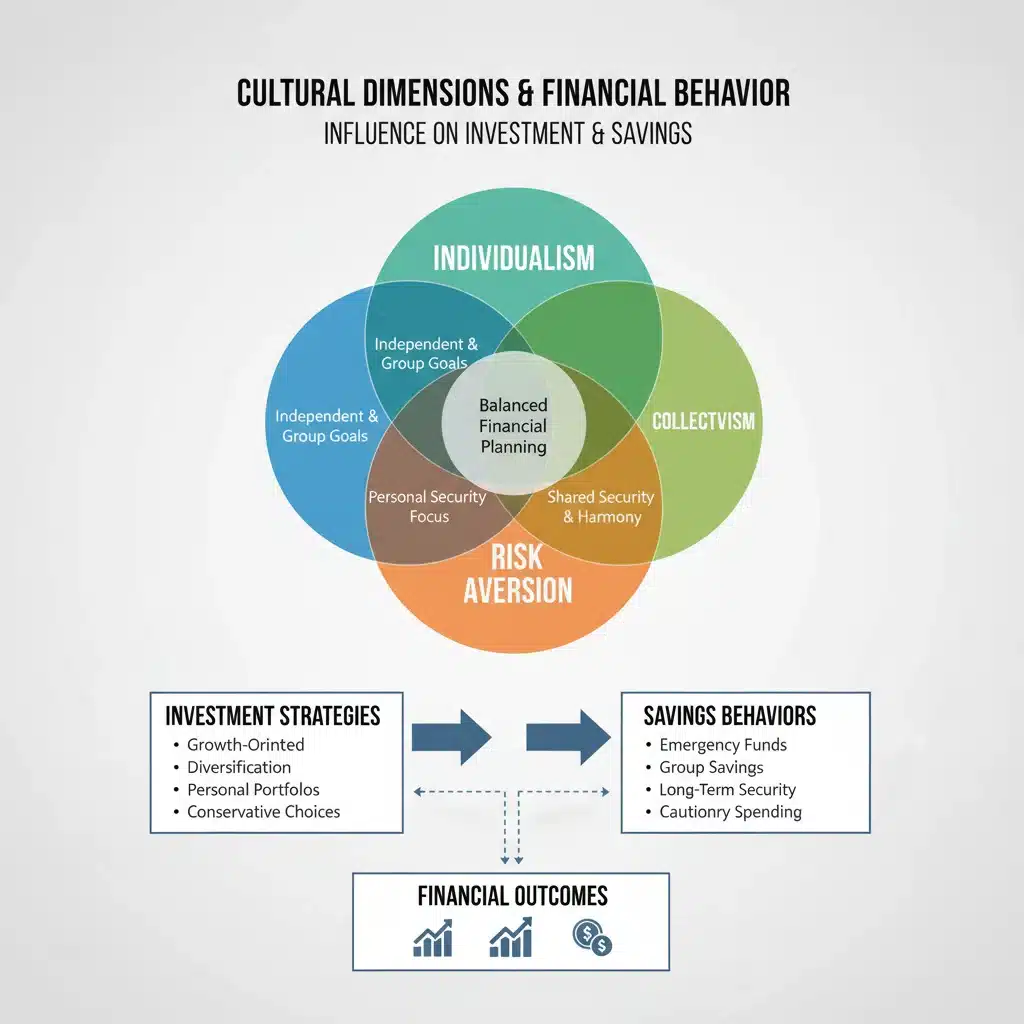
To truly grasp the Cultural Financial Impact, we must first define what we mean by ‘culture’ in this context. Culture encompasses a broad spectrum of elements, including religion, language, historical experiences, social structures (e.g., individualism vs. collectivism), power distance, uncertainty avoidance, and long-term vs. short-term orientation. Each of these dimensions can subtly, or overtly, steer financial behaviors. For instance, a society with a strong emphasis on collectivism might prioritize family well-being and intergenerational transfers over individual accumulation of wealth, leading to different savings and investment patterns compared to an individualistic society.
Individualism vs. Collectivism: A Core Cultural Divide
One of the most widely studied cultural dimensions is the dichotomy between individualism and collectivism. In individualistic cultures, such as those prevalent in many Western nations, personal achievement, self-reliance, and individual financial independence are highly valued. This often translates into a greater propensity for individual stock ownership, entrepreneurial ventures, and personal retirement planning. Decisions are often made with the individual’s direct benefit in mind, and financial risks might be viewed as opportunities for personal gain.
Conversely, in collectivistic cultures, common in many Asian, African, and Latin American societies, the emphasis is on group harmony, loyalty, and the welfare of the extended family or community. Financial decisions in these contexts are frequently guided by familial obligations, communal support systems, and a desire to maintain social cohesion. This can manifest as higher rates of intergenerational wealth transfer, significant family contributions to education or housing, and a preference for less risky investments that protect the collective’s assets. The Cultural Financial Impact here is evident in the communal pooling of resources, informal lending networks, and a strong sense of shared financial responsibility, which can act as a natural buffer against individual financial shocks.
Risk Aversion and Uncertainty Avoidance
Another crucial cultural dimension influencing financial decisions is risk aversion and uncertainty avoidance. Some cultures are inherently more comfortable with ambiguity and risk-taking, while others prefer structured environments and predictable outcomes. This deeply rooted cultural trait significantly impacts investment choices. For example, cultures with high uncertainty avoidance might favor stable, low-risk investments like government bonds or real estate, and shy away from volatile stock markets or speculative ventures. They may also be more inclined to save aggressively as a hedge against future uncertainties.
In contrast, cultures that are more comfortable with risk might exhibit a greater willingness to invest in innovative startups, engage in more aggressive portfolio strategies, or embrace new financial technologies. As the global financial landscape in 2026 continues to evolve with cryptocurrencies, decentralized finance (DeFi), and complex algorithmic trading, these cultural predispositions towards risk will play a pivotal role in the adoption and integration of these new financial paradigms. The Cultural Financial Impact on market volatility and innovation adoption cannot be overstated.
The Role of Religion and Tradition in Financial Practices
Religious beliefs and long-standing traditions also exert a profound Cultural Financial Impact. Many religions provide specific guidelines or ethical frameworks for economic activities, influencing everything from lending practices to charitable giving. Islamic finance, for example, operates under Sharia law, prohibiting interest (riba), speculation (gharar), and investments in industries deemed unethical (e.g., alcohol, gambling). This has led to the development of a distinct financial ecosystem with unique products and services, such as Sukuk (Islamic bonds) and Takaful (Islamic insurance).
Similarly, in some cultures, traditions dictate significant financial outlays for life events such as weddings, funerals, or religious ceremonies. These expenditures, while often seen as social obligations, can significantly impact household savings rates and disposable income. The cultural expectation to uphold these traditions can lead to specific financial planning strategies, including informal savings groups or family contributions, which are critical to understanding local economic flows. As global migration continues and diverse communities interact, understanding these culturally driven financial behaviors becomes essential for financial advisors and institutions operating across borders.

Cultural Nuances and Investment Behavior in 2026
Looking specifically at 2026, several trends underscore the growing importance of cultural considerations in investment behavior. The rise of ESG (Environmental, Social, and Governance) investing, for instance, is not solely driven by ethical concerns but also by evolving cultural values. Societies that place a high value on environmental stewardship or social justice are more likely to direct their investments towards companies that align with these principles. This shift reflects a deeper cultural resonance with sustainable practices and responsible corporate behavior, creating a significant Cultural Financial Impact on capital allocation.
Furthermore, the increasing financial literacy and access to global markets in developing nations are bringing new cultural perspectives into the investment arena. As individuals from diverse cultural backgrounds gain more control over their finances, their inherent cultural biases and preferences will increasingly shape global market dynamics. This includes preferences for specific asset classes, attitudes towards debt, and the role of intergenerational wealth transfer in investment decisions. For instance, in cultures where property ownership is a strong symbol of stability and status, real estate investments might remain a dominant preference, even amidst fluctuating market conditions.
The Digital Divide and Cultural Adaptation
The rapid digitalization of financial services also presents a fascinating intersection with cultural nuances. While digital platforms offer unprecedented access and convenience, their adoption rates and usage patterns are often mediated by cultural factors. In some cultures, a preference for face-to-face interactions and trust in traditional institutions might slow the adoption of purely digital banking or investment platforms. Conversely, in tech-savvy cultures, there might be a quicker embrace of fintech innovations, mobile payments, and robo-advisors.
Moreover, the design and user experience of financial apps and services must be culturally sensitive. A platform designed for a Western audience might not resonate with users in an Eastern culture, where different visual cues, communication styles, and data privacy expectations prevail. The success of global fintech companies in 2026 will heavily depend on their ability to understand and adapt to these cultural specificities, ensuring their offerings are not just technologically advanced but also culturally appropriate, thereby maximizing their Cultural Financial Impact and reach.
Policy Implications and Global Economic Governance
The profound Cultural Financial Impact extends beyond individual and institutional investment decisions to national and international economic policy. Policymakers grappling with issues such as national savings rates, pension reforms, and economic development strategies must account for the cultural fabric of their societies. Policies that do not align with deeply held cultural values are likely to face resistance and may fail to achieve their intended objectives. For example, a pension system designed for an individualistic society might struggle in a collectivistic one where family support is the primary form of elder care.
At the international level, multilateral organizations and global financial institutions are increasingly recognizing the need for culturally informed approaches to economic assistance and development. Programs aimed at fostering financial inclusion or promoting entrepreneurship must be tailored to the specific cultural context of beneficiary nations. A one-size-fits-all approach is often ineffective, as what motivates financial behavior in one culture may not in another. Understanding cultural dimensions can help in designing more effective interventions that resonate with local populations and foster sustainable economic growth.
Challenges and Opportunities for Navigating Cultural Financial Impact in 2026
Navigating the complex landscape of cultural nuances in financial decision-making presents both challenges and unparalleled opportunities for 2026. One of the primary challenges is the inherent difficulty in quantifying and measuring cultural influence. Cultural values are often implicit, deeply embedded, and can be difficult to articulate or survey directly. This makes it challenging for traditional quantitative financial models to fully incorporate their effects.
However, the opportunities are vast. For financial institutions, a deeper understanding of the Cultural Financial Impact can lead to the development of more personalized and effective financial products and services. For example, offering investment products that align with specific religious beliefs or savings plans that support traditional family structures can significantly enhance customer engagement and trust. For investors, recognizing cultural biases can help in diversifying portfolios more effectively and understanding market anomalies that might be driven by culturally specific behaviors. For instance, understanding the cultural propensity for certain asset classes in a particular region can inform strategic allocation decisions.
Furthermore, cross-cultural financial literacy programs can be designed to be more impactful if they consider the existing cultural frameworks. Instead of imposing universal financial concepts, such programs can build upon indigenous financial practices and integrate new knowledge in a culturally sensitive manner. This approach fosters greater acceptance and leads to more sustainable improvements in financial well-being. The evolving global landscape also means that businesses and individuals must continuously adapt. What was once considered a niche understanding of a particular culture’s financial habits is rapidly becoming a mainstream requirement for anyone operating in the global economy. This continuous learning and adaptation are crucial for thriving in 2026 and beyond.
The Interplay of Globalization and Local Culture
As globalization continues its relentless march, there is a fascinating interplay between the homogenization of certain financial practices and the persistent strength of local cultural nuances. While global financial instruments and platforms become more prevalent, local cultural values often act as a filter, shaping how these global offerings are adopted and utilized. This means that even as financial markets become more integrated, the underlying motivations and behaviors of participants will continue to be distinct, influenced by their cultural heritage.
For example, the rapid growth of e-commerce and digital payments might seem to suggest a universal shift. However, the preferred payment methods, the level of trust in online transactions, and even the types of goods and services purchased online can vary significantly based on cultural norms. In some cultures, a preference for cash transactions due to historical distrust of financial institutions or a desire for anonymity might persist despite the availability of digital alternatives. Understanding these localized adaptations of global trends is key to unlocking new markets and serving diverse customer bases effectively, highlighting the enduring Cultural Financial Impact.
Conclusion: Embracing Cultural Intelligence in Finance
As we navigate the complexities of 2026, the indelible Cultural Financial Impact on decision-making is undeniable and increasingly significant. From individual savings to international trade agreements, cultural nuances shape perceptions of value, risk, and future planning. Moving forward, success in the financial world will not only demand analytical prowess and technological sophistication but also a profound sense of cultural intelligence. Financial professionals, policymakers, and investors must cultivate an awareness of how different cultural lenses color economic choices, moving beyond simplistic assumptions of universal rationality.
Embracing cultural diversity in financial analysis means recognizing that there is no single ‘correct’ way to manage money or invest. Instead, it involves appreciating the rich spectrum of human motivations and behaviors that stem from distinct cultural backgrounds. By integrating cultural insights into financial strategies, we can foster more inclusive, effective, and resilient financial systems that truly serve the needs of a globally diverse population. The future of finance in 2026 and beyond is not just about numbers; it’s about people, their values, and their cultures.