Personalized AI Assistants: Revolutionizing Daily Tasks for US Consumers

In an increasingly fast-paced world, the quest for efficiency and convenience has become paramount for US consumers. The digital landscape is constantly evolving, bringing forth innovations designed to simplify our lives. Among these, personalized AI assistants stand out as a transformative force, promising to reshape how we interact with technology and manage our daily routines. These intelligent systems go beyond basic commands, learning our preferences, anticipating our needs, and proactively offering solutions, thereby creating a truly bespoke user experience. The concept of personalized AI assistants is not entirely new, with early iterations existing in the form of voice assistants that can set alarms or play music. However, recent advancements, particularly in two key technological areas, are propelling these assistants into an entirely new realm of capability and integration. This article delves deep into how these cutting-edge technologies are empowering personalized AI assistants to become indispensable tools for US consumers, streamlining everything from household management to personal finance and health.
The Evolution of Personalized AI Assistants: Beyond Basic Commands
For years, AI assistants have been a part of our lives, albeit in a more rudimentary form. We’ve grown accustomed to asking our smart speakers about the weather or setting reminders. But the vision for personalized AI assistants has always been grander: to create an intelligent entity that understands us on a profound level, anticipating our needs before we even articulate them. This vision is rapidly becoming a reality, driven by significant breakthroughs in artificial intelligence. The shift from reactive to proactive assistance marks a pivotal moment. Imagine an AI that not only reminds you about an upcoming appointment but also suggests the best route based on real-time traffic, orders your usual coffee for pickup along the way, and even sends a quick update to your family about your estimated arrival. This level of seamless, predictive integration is what modern personalized AI assistants aim to deliver.
The demand for such sophisticated assistance is particularly high among US consumers, who are often juggling multiple responsibilities and seeking ways to optimize their time. A recent survey indicated that a significant percentage of Americans are willing to adopt AI technologies that promise to enhance their daily productivity and reduce mental load. This eagerness to embrace innovation creates a fertile ground for personalized AI assistants to flourish. The key to their success lies in their ability to learn and adapt. Unlike generic tools, personalized AI assistants are designed to evolve with their users, becoming more effective and intuitive over time as they gather more data about individual habits, preferences, and contexts. This continuous learning loop is fundamental to delivering truly personalized experiences that feel less like interacting with a machine and more like collaborating with a highly efficient, understanding partner.
The underlying technologies that make this possible are complex and multifaceted, drawing from various fields of AI research. Natural Language Processing (NLP) allows these assistants to understand and respond to human language with increasing accuracy and nuance. Machine Learning (ML) algorithms enable them to identify patterns in user behavior, predict future needs, and make intelligent recommendations. Furthermore, advancements in contextual awareness – the ability of an AI to understand the surrounding environment and current situation – are crucial for providing relevant and timely assistance. These foundational elements have been steadily improving, but it’s the convergence and refinement of specific new technologies that are truly unlocking the next generation of personalized AI assistants for US consumers.
Technology 1: Advanced Contextual Understanding and Predictive Analytics
One of the most significant leaps forward for personalized AI assistants comes from the synergy of advanced contextual understanding and predictive analytics. Historically, AI assistants operated largely in a vacuum, responding to explicit commands without a deep grasp of the user’s current situation, mood, or broader goals. This limitation often led to frustrating interactions and a lack of true helpfulness. However, new developments are changing this dramatically. Modern personalized AI assistants are now equipped with sophisticated sensors, access to a wider array of data sources, and more powerful algorithms that allow them to build a comprehensive ‘contextual profile’ of the user.
How it Works:
- Multi-modal Data Fusion: These assistants can now process and integrate data from various modalities simultaneously. This includes voice commands, text inputs, location data from GPS, calendar entries, email content, smart home sensor data (e.g., temperature, light levels), wearable device metrics (e.g., heart rate, sleep patterns), and even biometric data. By fusing these disparate data points, the AI can construct a much richer understanding of the user’s current state and environment.
- Real-time Environmental Awareness: Beyond just location, personalized AI assistants can now interpret the immediate physical environment. For instance, if you’re in your car, the AI understands that navigation and traffic updates are likely priorities. If you’re in your kitchen, recipe suggestions or grocery list management become more relevant. This real-time awareness allows the AI to offer highly pertinent assistance without being explicitly asked.
- Emotional and Intent Recognition: Leveraging advanced NLP and machine learning, personalized AI assistants are becoming increasingly adept at recognizing subtle cues in voice tone, word choice, and even facial expressions (via integrated cameras, with user consent) to infer emotional states and underlying user intent. This enables the AI to respond with greater empathy and tailor its suggestions more appropriately. For example, if it detects stress in your voice, it might suggest a calming activity or re-prioritize your schedule.
- Proactive Recommendation Engines: With a deep contextual understanding, personalized AI assistants can employ highly sophisticated predictive analytics. They don’t just react; they anticipate. Based on past behavior, current context, and learned preferences, they can predict what you might need or want next. This could range from ordering your preferred lunch when your calendar shows a busy afternoon to pre-heating your oven when you’re on your way home, knowing you often cook dinner at that time.
Impact on US Consumers:
For US consumers, the implications are profound. Daily tasks that once required conscious effort and decision-making can now be seamlessly managed by their personalized AI assistants. Imagine waking up to an AI that has already adjusted your home’s thermostat, brewed your coffee, reviewed your calendar, and provided a concise summary of urgent emails and news, all tailored to your morning routine. During your commute, it might suggest alternative routes to avoid unexpected traffic, book a car wash for your vehicle based on its last wash date, and even play your favorite podcast without you lifting a finger. This level of proactive assistance significantly reduces cognitive load, allowing individuals to focus on more complex or enjoyable tasks, thus boosting overall productivity and well-being.
Furthermore, this technology extends to areas like personal finance. A personalized AI assistant could monitor spending patterns, alert you to potential overspending in certain categories, suggest budget adjustments, and even identify opportunities for savings or investment based on your financial goals and current market conditions. It transforms financial management from a chore into an effortless, continuously optimized process. The ability of these personalized AI assistants to learn and adapt means that over time, the assistance becomes even more precise and invaluable, integrating so smoothly into daily life that it feels like an extension of one’s own capabilities.
Technology 2: Hyper-Personalized Adaptive Interfaces and Augmented Reality Integration
The second groundbreaking technology revolutionizing personalized AI assistants is the development of hyper-personalized adaptive interfaces, often integrated with augmented reality (AR). While advanced contextual understanding dictates what assistance is offered, these interfaces dictate how that assistance is delivered, making it more intuitive, less intrusive, and highly engaging for US consumers.
How it Works:
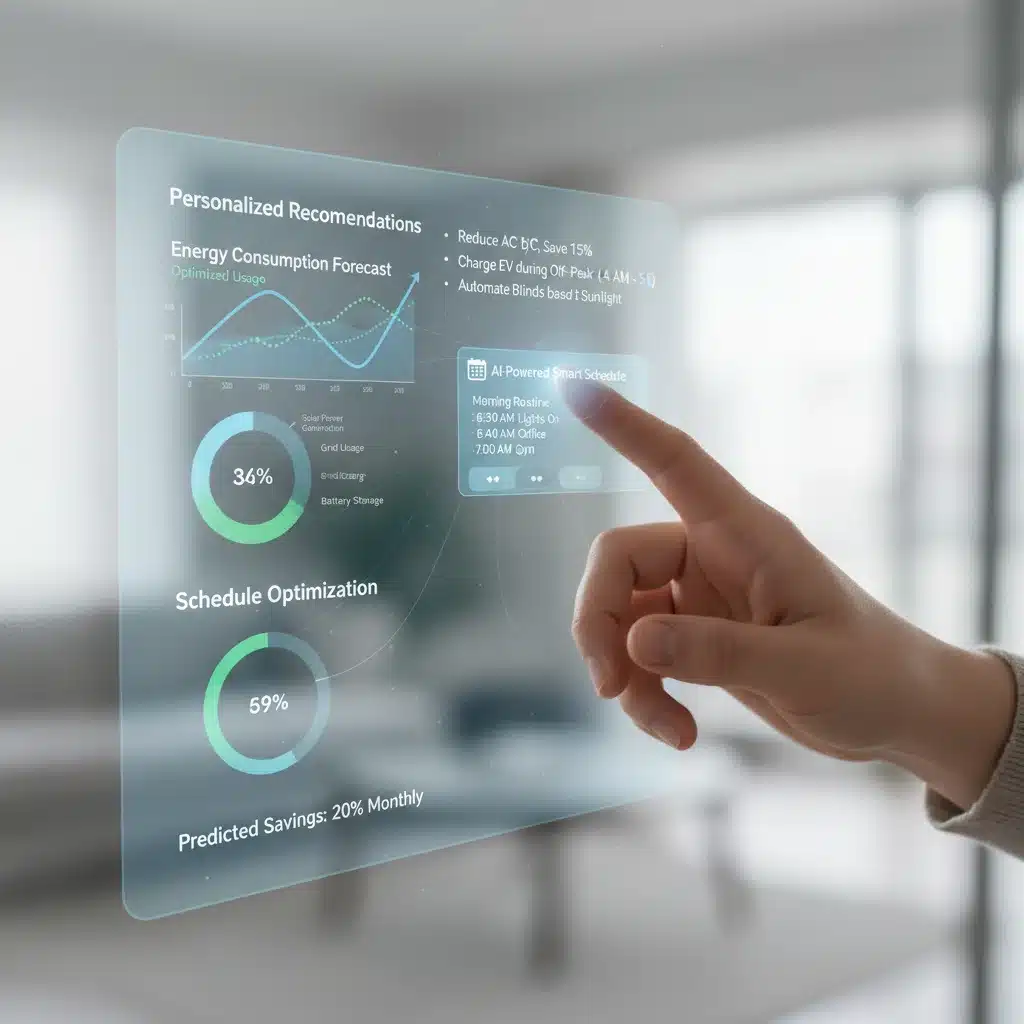
- Dynamic Interface Customization: Traditional interfaces are often static. Hyper-personalized adaptive interfaces, however, dynamically adjust their layout, information density, and presentation style based on the user’s current task, context, and even their cognitive load. If you’re driving, the interface might simplify to essential navigation cues. If you’re relaxing at home, it might present more detailed information or entertainment options. This adaptability ensures that the personalized AI assistants always present information in the most digestible and relevant way.
- Predictive UI/UX Elements: These interfaces don’t just react; they anticipate your next action. Based on your habits and the current context, the AI might pre-populate forms, highlight likely menu options, or bring frequently used functions to the forefront. This minimizes clicks, taps, or voice commands, making interactions incredibly fluid and efficient.
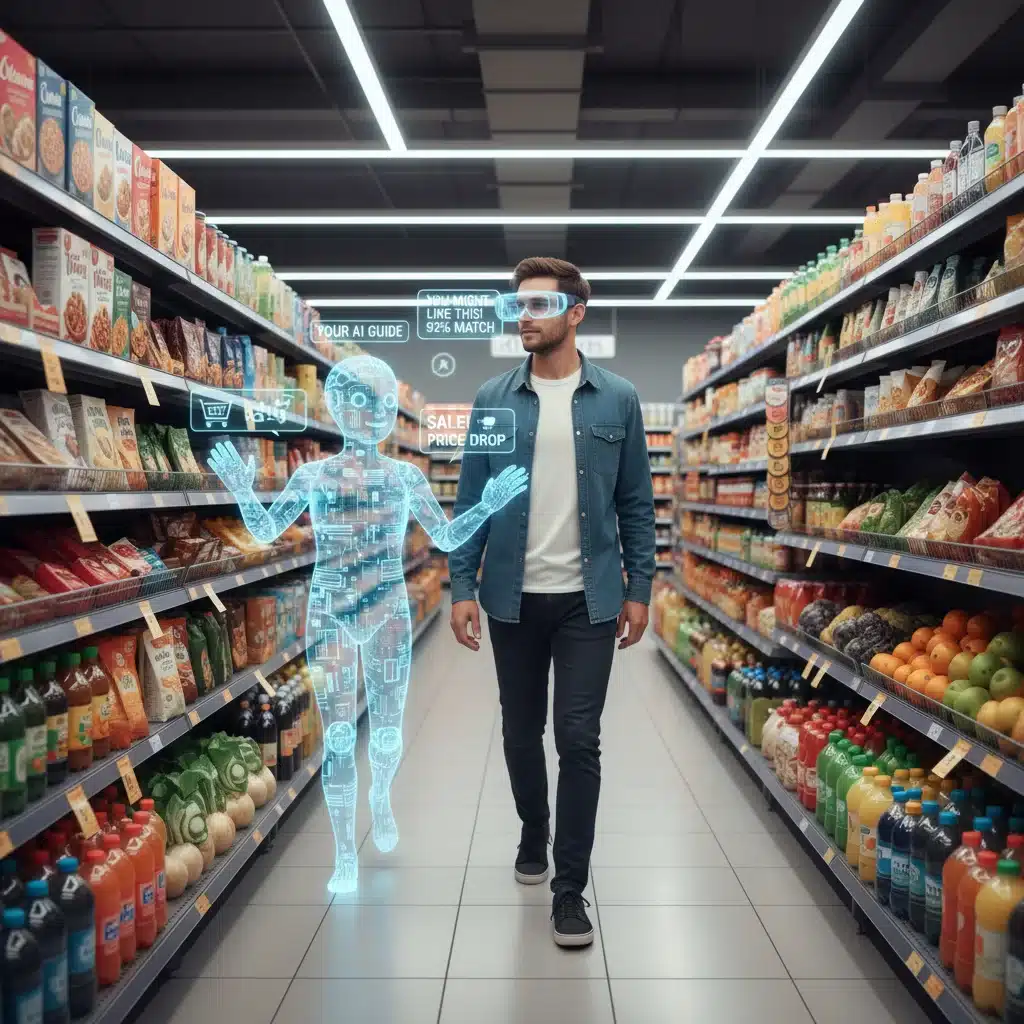
- Augmented Reality Overlays: This is where the technology truly shines. Personalized AI assistants, when integrated with AR devices (like smart glasses or smartphone cameras), can overlay digital information directly onto the real world. Imagine walking through a grocery store, and your AI assistant, through your AR glasses, highlights items on your shopping list, displays nutritional information as you look at products, or even suggests recipes based on what’s in your cart and your dietary preferences.
- Haptic and Auditory Feedback Personalization: Beyond visual interfaces, these personalized AI assistants can also tailor haptic (touch) and auditory feedback. The type of vibration for a notification, the tone of voice for an alert, or the background music selection can all be customized to individual preferences, creating a more pleasant and less disruptive experience.
- Biometric and Behavioral Biometric Integration: For enhanced security and personalization, these interfaces can integrate with biometrics (like fingerprint or facial recognition) and behavioral biometrics (like typing rhythm or gait). This allows for seamless, secure authentication and further refines the AI’s understanding of the user, allowing for even more precise personalization.
Impact on US Consumers:
The impact of hyper-personalized adaptive interfaces and AR integration on US consumers is transformative, particularly in areas requiring real-time information and interaction with the physical world. Shopping, for example, becomes an entirely new experience. Instead of fumbling with a list, your personalized AI assistant guides you through the store, highlighting deals, providing product reviews, and ensuring you don’t forget anything. For home improvement, an AI assistant could overlay instructions onto a physical object, guiding you step-by-step through an assembly process, or showing how a new piece of furniture would look in your living room before you buy it.
In the professional sphere, these personalized AI assistants could provide real-time data overlays during meetings, instantly retrieve relevant documents, or translate languages on the fly, all within your field of vision. For health and fitness, an AR-enabled AI could provide live feedback during workouts, display vital signs, or guide you through meditation exercises with visual cues. The ability to seamlessly blend digital information with the physical world, presented in a way that is uniquely tailored to each individual, elevates the utility and convenience of personalized AI assistants to an unprecedented level. This isn’t just about accessing information; it’s about experiencing the world with an intelligent layer of personalized assistance that enhances every interaction.
Synergy: How These Technologies Work Together
The true power of these personalized AI assistants emerges when advanced contextual understanding and predictive analytics combine with hyper-personalized adaptive interfaces and augmented reality. These aren’t isolated advancements but rather complementary components that create a holistic, intelligent ecosystem designed to serve the US consumer.
Imagine the following scenario: Your personalized AI assistant, powered by advanced contextual understanding, notices from your calendar and location data that you are approaching your local grocery store after work. Predictive analytics suggests you are low on several staples based on your past purchasing habits and current inventory (perhaps tracked via smart pantry sensors). Simultaneously, your smart home system reports that your refrigerator’s water filter needs replacement.
As you enter the store, your personalized AI assistant, leveraging hyper-personalized adaptive interfaces and AR integration, projects your optimized shopping list onto your AR glasses. It highlights the shortest path to each item, displays current sales and coupons, and even shows customer reviews or dietary information as you look at products. When you reach the water filter aisle, it automatically reminds you about the specific model compatible with your refrigerator. If you hesitate, it might suggest a highly-rated alternative or show a quick tutorial on how to install it, all overlaid in your field of vision. Furthermore, if you typically buy a specific brand of organic milk, and it’s out of stock, your personalized AI assistant might proactively suggest a suitable alternative based on your preferences and previous choices, displaying its location in the store.
This seamless interaction demonstrates how these technologies work in concert. The contextual understanding informs what information is relevant, predictive analytics anticipates your needs, and the adaptive interface with AR delivers that information in the most intuitive and actionable way possible. This creates an experience that is not just efficient but also deeply intuitive and integrated into the fabric of daily life for US consumers, making personalized AI assistants truly indispensable.
Ethical Considerations and Future Outlook
While the benefits of personalized AI assistants are immense, it’s crucial to address the ethical considerations that accompany such powerful technology. Data privacy and security are paramount. Personalized AI assistants rely on vast amounts of personal data to function effectively, raising concerns about how this data is collected, stored, and used. US consumers will demand transparency and robust security measures to protect their sensitive information. Developers and companies must prioritize user control, allowing individuals to manage their data preferences and understand the algorithms that drive their personalized experiences.
Another consideration is the potential for algorithmic bias. If the data used to train these personalized AI assistants is biased, the recommendations and assistance provided could perpetuate or even amplify existing societal inequalities. Ensuring fairness, accountability, and regular auditing of AI systems will be vital to prevent such outcomes. Furthermore, the increasing reliance on personalized AI assistants raises questions about human autonomy and decision-making. While convenience is desirable, it’s important to strike a balance where AI augments human capabilities rather than replaces critical thinking or personal responsibility.
Looking ahead, the future of personalized AI assistants is bright and rapidly evolving. We can expect even deeper integration with smart cities, autonomous vehicles, and advanced healthcare systems. Imagine an AI assistant that not only manages your personal health records but also coordinates with your doctors, schedules appointments, and provides personalized wellness coaching based on real-time biometric data and genetic predispositions. The boundaries between our physical and digital lives will continue to blur, with personalized AI assistants acting as intelligent orchestrators, harmonizing these two realms.
The ongoing research in areas like explainable AI (XAI) will also be critical, allowing users to understand why their personalized AI assistants are making certain recommendations or decisions. This transparency will build greater trust and acceptance among US consumers. As these technologies mature, we may also see the emergence of specialized personalized AI assistants tailored for specific niches, from advanced creative tools for artists to hyper-efficient personal tutors for students, each leveraging the core principles of personalization, contextual awareness, and adaptive interfaces to deliver unparalleled value.
Conclusion: The Dawn of a New Era for US Consumers
The rise of personalized AI assistants, powered by advanced contextual understanding, predictive analytics, hyper-personalized adaptive interfaces, and augmented reality integration, marks a significant paradigm shift in how US consumers interact with technology. These innovations are moving beyond simple automation, offering a truly intelligent, proactive, and deeply integrated form of assistance that promises to streamline daily tasks, enhance productivity, and significantly improve overall quality of life.
From managing complex schedules and optimizing household chores to revolutionizing shopping experiences and providing invaluable financial insights, personalized AI assistants are poised to become indispensable companions. While ethical considerations surrounding data privacy and bias must be carefully navigated, the trajectory of this technology points towards a future where our digital companions understand us better than ever before, anticipating our needs and empowering us to live more efficient, fulfilling lives. For US consumers, this is not just about adopting new gadgets; it’s about embracing a new era of intelligent living, where personalized AI assistants are at the forefront of simplifying the complexities of the modern world.